INTRODUCTION:
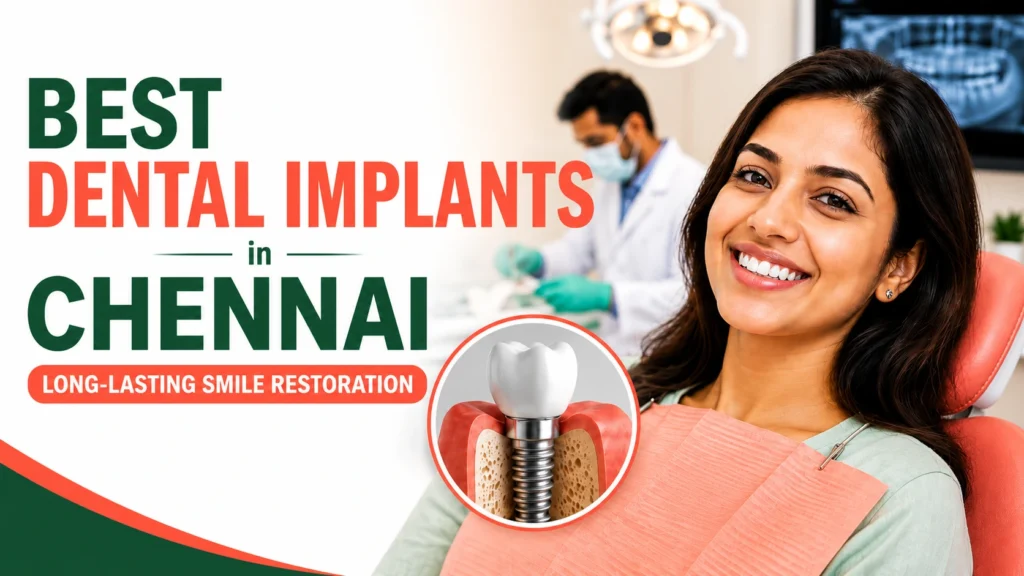
Missing teeth can affect much more than your smile. Many people struggle with difficulty chewing, unclear speech, low confidence, and discomfort caused by gaps or loose dentures. Over time, tooth loss can also lead to jawbone deterioration and facial changes if left untreated. This is why more people are searching for reliable and long-lasting solutions like dental implants in Chennai. Dental implants provide a permanent replacement for missing teeth and closely mimic the look, feel, and function of natural teeth. Unlike removable dentures, implants stay securely fixed in the jawbone, allowing you to eat, speak, and smile with confidence. Chennai has become a preferred destination for advanced implant dentistry because of modern technology, experienced specialists, and affordable treatment options. In this guide, explore the benefits, procedure, costs, recovery process, and everything you need to know about choosing the right dental implant treatment in Chennai for a healthier and more confident smile.
What Are Dental Implants?
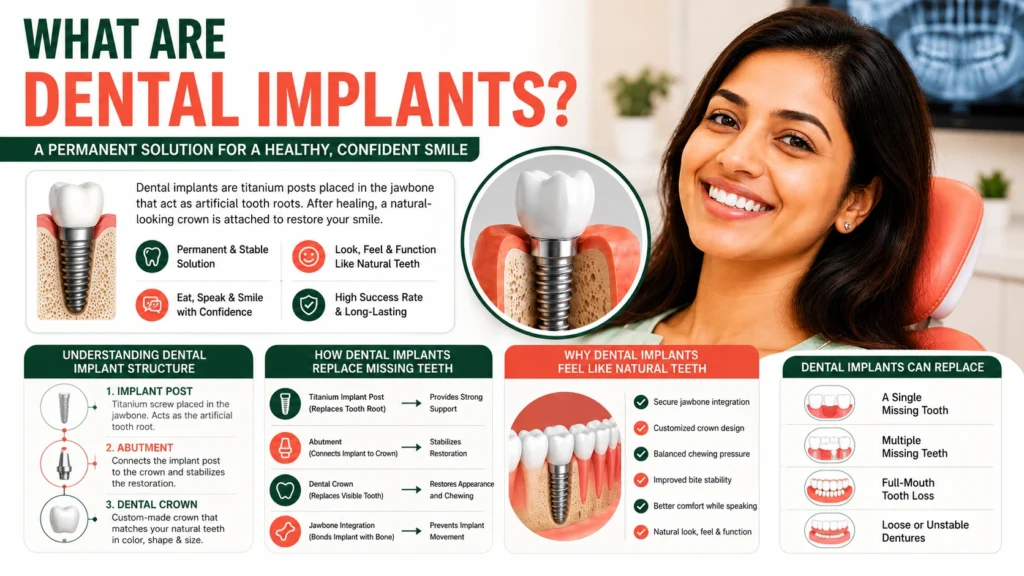
Dental implants are permanent tooth replacement solutions designed to restore missing teeth with natural-looking and functional artificial teeth. Dentists place a small titanium post into the jawbone, where it acts like an artificial tooth root. After healing, they attach a dental crown that closely matches the appearance and function of natural teeth.
Unlike removable dentures, dental implants stay firmly fixed inside the mouth, allowing patients to eat, speak, and smile comfortably. Studies show that dental implants have a very high success rate when patients maintain proper oral hygiene and follow regular dental care routines.
Dental implants can replace:
- A single missing tooth
- Multiple missing teeth
- Full-mouth tooth loss
- Loose or unstable dentures
Understanding Dental Implant Structure
Dental implants consist of three main components that work together to replace missing teeth securely and naturally. Each part plays an important role in restoring chewing ability, appearance, and long-term oral function.
The three major parts of a dental implant include:
- Implant Post
Dentists place a titanium screw-like post into the jawbone. This post acts as the artificial tooth root and provides strong support for the replacement tooth. - Abutment
The abutment connects the implant post to the dental crown. It sits above the gum line and helps stabilize the final restoration. - Dental Crown
The crown forms the visible part of the replacement tooth. Dentists customize it to match the color, shape, and size of surrounding natural teeth.
How Dental Implants Replace Missing Teeth
Dental implants replace missing teeth by acting as artificial tooth roots that support natural-looking replacement teeth. Dentists surgically place titanium implant posts into the jawbone, where they gradually fuse with the bone and create a stable foundation for crowns, bridges, or dentures.
This process restores both appearance and oral function while preventing bone loss caused by missing teeth.
| Implant Component | Function | Benefit |
| Titanium Implant Post | Replaces tooth root | Provides strong support |
| Abutment | Connects implant to crown | Stabilizes restoration |
| Dental Crown | Replaces visible tooth | Restores appearance and chewing |
| Jawbone Integration | Bonds implant with bone | Prevents implant movement |
Why Dental Implants Feel Like Natural Teeth
Dental implants feel very similar to natural teeth because they integrate directly with the jawbone and remain securely fixed in place. Unlike removable dentures, implants do not move while chewing, speaking, or smiling, which creates a more comfortable and natural experience for patients.
The titanium implant post acts like a natural tooth root by stimulating the jawbone during chewing. This stability allows patients to bite and chew foods more confidently without discomfort or slipping.
For example, a person wearing loose dentures may avoid hard foods like apples or nuts because the dentures shift during chewing. After dental implant treatment, many patients regain stronger chewing ability and feel more comfortable eating normally again.
Dental implants also improve speech clarity because they stay firmly positioned inside the mouth. Patients often describe implants as feeling almost identical to natural teeth after the healing process completes.
Additional reasons implants feel natural include:
- Secure jawbone integration
- Customized crown design
- Balanced chewing pressure
- Improved bite stability
- Better comfort during speaking
Modern implant technology allows dentists to match the color, shape, and alignment of replacement teeth closely with natural teeth, creating a seamless and highly aesthetic smile restoration.
Who Needs Dental Implants?
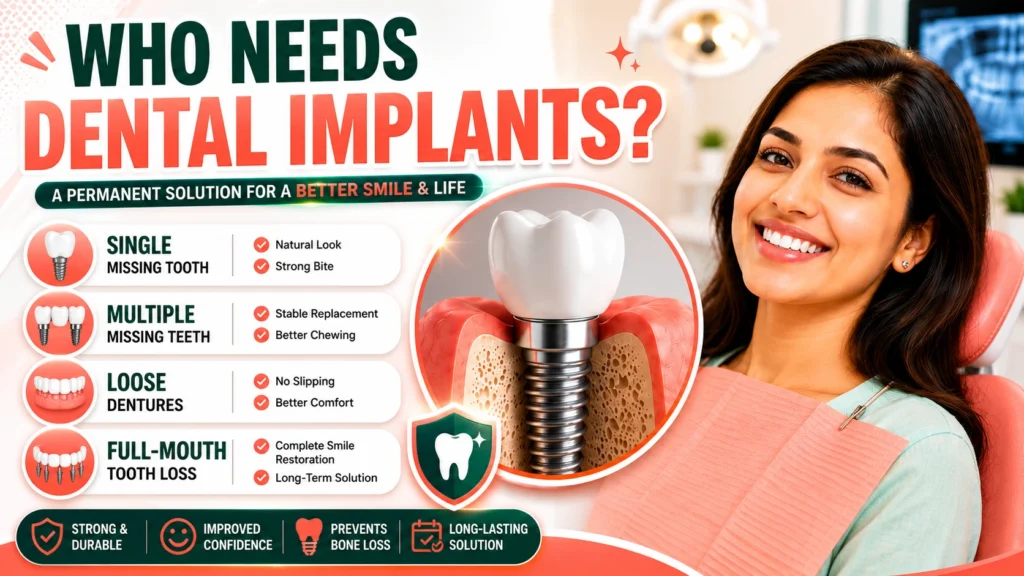
Dental implants provide an ideal solution for people who have lost one or more teeth and want a permanent replacement option. Missing teeth can affect chewing ability, speech clarity, facial appearance, and self-confidence. Over time, tooth loss may also lead to jawbone shrinkage and shifting of nearby teeth if left untreated.
People who commonly benefit from dental implants include:
- Individuals with a single missing tooth
- Patients missing multiple teeth
- People struggling with loose dentures
- Adults with full-mouth tooth loss
Single Missing Tooth Replacement
A single missing tooth can create more problems than many people realize. Besides affecting appearance, the gap may cause nearby teeth to shift, reduce chewing efficiency, and increase stress on surrounding teeth. Dental implants provide one of the most effective long-term solutions for replacing a single missing tooth.
Unlike traditional dental bridges, implants do not require support from adjacent healthy teeth. Dentists place a titanium implant post directly into the jawbone, where it acts as an artificial tooth root.
Benefits of single tooth implants include:
- Natural appearance
- Strong chewing ability
- Long-term durability
- Jawbone preservation
- No damage to nearby teeth
- Improved smile confidence
Multiple Missing Teeth
Multiple missing teeth can affect chewing, speech, facial appearance, and overall oral health. Large gaps between teeth may also cause remaining teeth to shift gradually, creating bite problems and uneven pressure during chewing. Dental implants offer stable and long-lasting solutions for replacing several missing teeth.
Dentists may use implant-supported bridges or multiple implants depending on the number and location of missing teeth.
| Tooth Loss Situation | Implant Solution | Main Benefit |
| Two Missing Teeth | Implant-supported bridge | Stable tooth replacement |
| Multiple Missing Teeth | Several implants | Improved chewing strength |
| Back Tooth Loss | Implant crowns | Better bite balance |
| Large Gaps Between Teeth | Implant bridge | Prevents teeth shifting |
Full Mouth Tooth Replacement
Full mouth tooth replacement helps people who have lost most or all of their teeth regain normal oral function and smile confidence. Severe tooth loss can make chewing difficult, affect speech clarity, and cause facial muscles to sag because of jawbone shrinkage. Dental implants provide a more stable and natural alternative to traditional removable dentures.
Dentists often recommend solutions such as:
- Full-mouth dental implants
- Implant-supported dentures
- All-on-4 implant systems
For example, an older adult struggling with loose dentures may choose implant-supported teeth to improve stability while eating and speaking. Many patients report feeling more comfortable socially because implants eliminate the fear of dentures slipping unexpectedly.
Implants also help maintain jawbone strength by stimulating the bone similarly to natural tooth roots. This support helps preserve facial structure and reduces the sunken facial appearance commonly associated with long-term tooth loss.
Modern digital implant planning allows dentists to restore an entire smile with fewer implants and more precise treatment methods. Patients often regain stronger chewing efficiency and improved speech after full-mouth implant rehabilitation.
With proper care and regular dental checkups, full-mouth dental implants can provide durable, functional, and natural-looking tooth replacement for many years.
Tips to Maintain Dental Implants
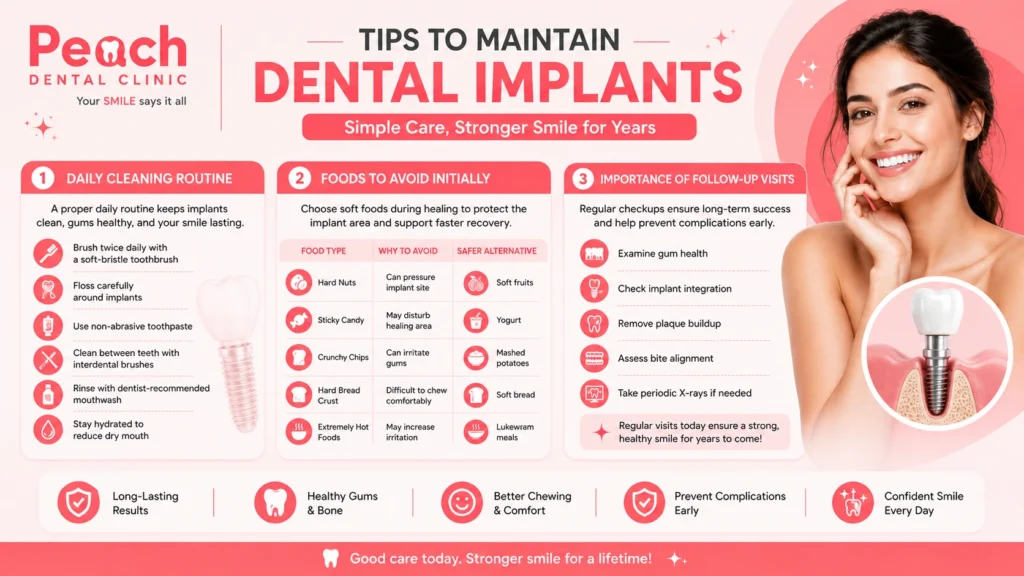
Proper care plays an important role in keeping dental implants healthy and long-lasting. Although implants cannot develop cavities like natural teeth, the surrounding gums and bone still require regular care and attention. Poor oral hygiene can lead to gum infections around implants, which may affect implant stability over time.
Studies show that dental implants can last for decades when patients maintain good oral hygiene and attend regular dental checkups. Simple daily habits can significantly improve implant success and overall oral health.
Daily Cleaning Routine
A proper daily cleaning routine helps protect dental implants from plaque buildup, gum infections, and long-term complications. Although implants use artificial materials, the surrounding gum tissue and jawbone still require consistent care to remain healthy.
Dentists recommend maintaining oral hygiene habits similar to natural teeth care. Regular cleaning prevents bacteria from accumulating around the implant area and supports long-term implant stability.
A good implant cleaning routine includes:
- Brushing twice daily with a soft-bristle toothbrush
- Flossing carefully around implants
- Using non-abrasive toothpaste
- Cleaning between teeth with interdental brushes
- Rinsing with dentist-recommended mouthwash
- Staying hydrated to reduce dry mouth
Foods to Avoid Initially
After dental implant surgery, choosing the right foods helps support healing and protects the implant area from unnecessary pressure. During the early healing phase, hard, sticky, or crunchy foods can irritate the surgical site and slow recovery.
Dentists usually recommend soft foods for the first few days after implant placement.
| Food Type | Why to Avoid | Safer Alternative |
| Hard Nuts | Can pressure implant site | Soft fruits |
| Sticky Candy | May disturb healing area | Yogurt |
| Crunchy Chips | Can irritate gums | Mashed potatoes |
| Hard Bread Crust | Difficult to chew comfortably | Soft bread |
| Extremely Hot Foods | May increase irritation | Lukewarm meals |
Importance of Follow-Up Visits
Follow-up visits play a crucial role in maintaining the long-term success of dental implants. Regular dental appointments allow dentists to monitor healing, check implant stability, and identify early signs of gum inflammation or bite problems before they become serious.
During follow-up visits, dentists usually:
- Examine gum health
- Check implant integration
- Remove plaque buildup
- Assess bite alignment
- Take periodic X-rays if needed
For example, a patient with mild gum irritation around an implant may not notice symptoms initially. Regular dental checkups help dentists detect the problem early and provide treatment before it affects implant stability.
Patients who skip follow-up appointments may increase the risk of complications such as peri-implantitis, bone loss, or implant loosening over time.
Professional cleanings during these visits also help remove hardened plaque around implants that regular brushing cannot fully clean. Dentists may additionally recommend specific oral hygiene tools based on the patient’s implant type and gum condition.
Research shows that patients who maintain routine implant checkups often experience better long-term implant success and healthier gums. Regular monitoring helps ensure that dental implants continue functioning comfortably and naturally for many years.
Conclusion
Dental implants offer a long-lasting and natural-looking solution for replacing missing teeth. From restoring chewing ability and speech clarity to improving smile confidence and jawbone support, implants provide significant functional and aesthetic benefits. Modern implant dentistry now allows patients to replace single, multiple, or full-mouth missing teeth with highly stable and comfortable restorations.
Proper oral hygiene, healthy eating habits, and regular dental checkups play an important role in maintaining implant success for many years. Choosing an experienced implant specialist and following personalized aftercare instructions can greatly improve healing and long-term results.
If you are searching for reliable dental implants in Chennai, consulting a trusted dental clinic can help you find the right treatment plan for your oral health needs. With advanced technology and professional care, dental implants can restore both your smile and confidence effectively.
FAQS:
1. What are dental implants?
Dental implants are titanium-based artificial tooth roots used to replace missing teeth permanently.
2. Are dental implants painful?
Most patients experience only mild discomfort during and after the procedure because dentists use local anesthesia during implant surgery.
3. How long do dental implants last?
With proper oral hygiene and regular dental checkups, dental implants can last 15 – 25 years or even longer.
4. Who is eligible for dental implants?
People with healthy gums, adequate jawbone support, and good overall oral health are usually suitable candidates for dental implants.
5. How long does the dental implant procedure take?
The complete process may take a few months because the implant needs time to heal and fuse with the jawbone before crown placement.
6. Can dental implants replace multiple missing teeth?
Yes. Dentists can use implants to replace single teeth, multiple teeth, or even full-mouth tooth loss.
7. What foods should I avoid after implant surgery?
Avoid hard, sticky, spicy, and crunchy foods during the initial healing period to protect the implant area.
8. Are dental implants better than dentures?
Dental implants provide better stability, chewing ability, comfort, and jawbone preservation compared to removable dentures.
9. How much do dental implants cost in Chennai?
The cost depends on factors such as implant type, number of implants, bone grafting needs, and crown material used.
10. How do I maintain dental implants?
Brush twice daily, floss regularly, attend routine dental checkups, and follow your dentist’s oral hygiene instructions to maintain healthy implants.