
Introduction
Crooked teeth, bite problems, and smile imperfections can affect both confidence and oral health. When considering orthodontic treatment, many patients face the same question clear aligners vs braces which option delivers the best results? While traditional braces have been the gold standard for decades, clear aligners have rapidly gained popularity due to their discreet appearance and convenience . In fact, a survey found that 67.7% of adult orthodontic patients preferred clear aligners over traditional braces, primarily because they are less visible and more comfortable. This preference often influences the debate around clear aligners vs braces, especially among adults seeking a discreet orthodontic solution.
Clear Aligners vs Braces: Quick Comparison
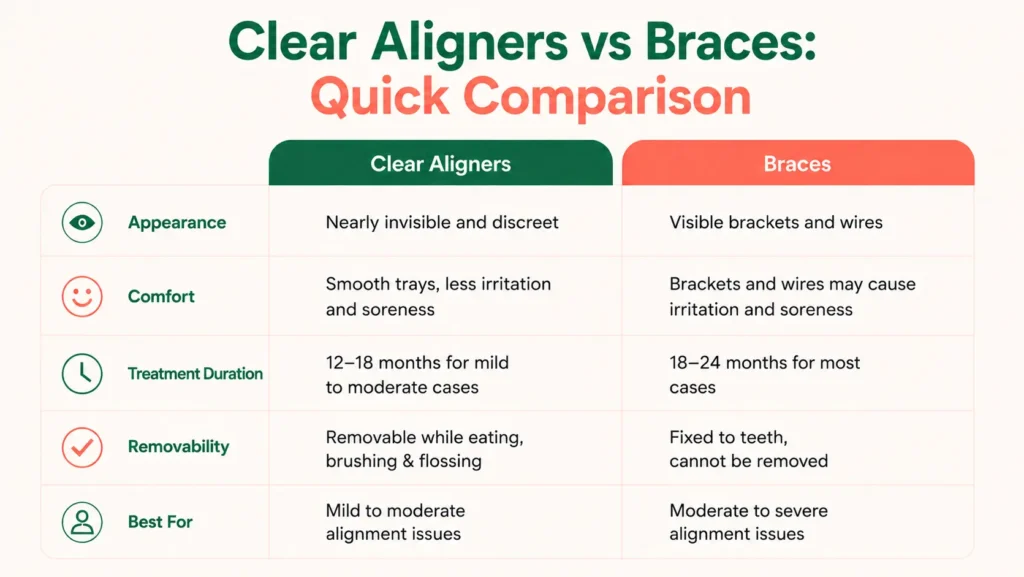
Choosing between clear aligners vs braces often depends on your dental needs, lifestyle, and budget. Both treatments straighten teeth and improve bite alignment, but they differ in several ways. Clear aligners offer a nearly invisible appearance and allow you to remove them while eating or brushing. Braces stay fixed to your teeth and provide greater control for complex orthodontic cases.Research published in the Journal of Clinical Medicine found that patients generally reported higher satisfaction with clear aligners because of their aesthetics and convenience. This is one reason why many people researching which is better aligners or braces often lean toward aligners for everyday comfort and appearance. However, braces remain highly effective for severe crowding, rotations, and bite issues. Understanding these differences helps you select the treatment that aligns with your goals and expectations.
Appearance
Appearance plays a major role when comparing clear aligners vs braces. Many patients, especially adults and working professionals, prefer treatments that do not draw attention to their smile. Clear aligners use transparent trays that fit snugly over the teeth, making them difficult to notice during conversations or photos. This is one of the key reasons why people researching which is better aligners or braces often consider aligners for their discreet appearance. Traditional metal braces, on the other hand, use visible brackets and wires attached to the teeth.
Studies show that aesthetics strongly influence orthodontic treatment choices, with many adults choosing aligners because of their discreet look. These findings highlight some of the key clear aligners benefits, particularly for individuals who want a less noticeable treatment option. Clear aligners allow patients to maintain confidence during social events, meetings, and public interactions.While ceramic braces offer a less noticeable alternative to metal braces, they still remain more visible than aligners. This difference is often highlighted when comparing clear aligners or braces, especially for adults seeking a more discreet treatment option. If appearance ranks high on your priority list, clear aligners often provide the most discreet orthodontic solution.
Comfort
Comfort can significantly affect your orthodontic experience. Both clear aligners and braces create pressure to move teeth, but patients often describe aligners as more comfortable.
Why clear aligners feel more comfortable:
- Smooth plastic trays reduce irritation to cheeks and gums.
- No metal brackets or wires cause friction.
- Fewer emergency visits for broken components.
Challenges with braces:
- Brackets may rub against the inside of the mouth.
- Wire adjustments can cause temporary soreness.
- Food particles can become trapped around brackets.
Research indicates that aligner patients often report lower pain levels during the initial stages of treatment. However, mild pressure remains normal with every new aligner tray. Braces may require a longer adjustment period, but most patients adapt within a few weeks and continue treatment comfortably.
Treatment Duration
Treatment time varies based on the complexity of the orthodontic issue. In general, clear aligners can complete treatment in 12 to 18 months for mild to moderate cases, while traditional braces often require 18 to 24 months. Severe crowding, bite problems, or tooth rotations may increase treatment duration regardless of the method used.
For example:
- A patient with minor spacing between front teeth may achieve results with aligners in about 12 months.
- A teenager with severe overcrowding and a deep bite may need braces for 24 months or longer.
- Moderate alignment issues often respond well to either treatment within 18 months.
Patient compliance also affects treatment speed. Clear aligners require at least 20–22 hours of daily wear. Missing wear time can delay progress. Braces work continuously because they stay fixed to the teeth, making treatment less dependent on patient habits.
Benefits of Clear Aligners
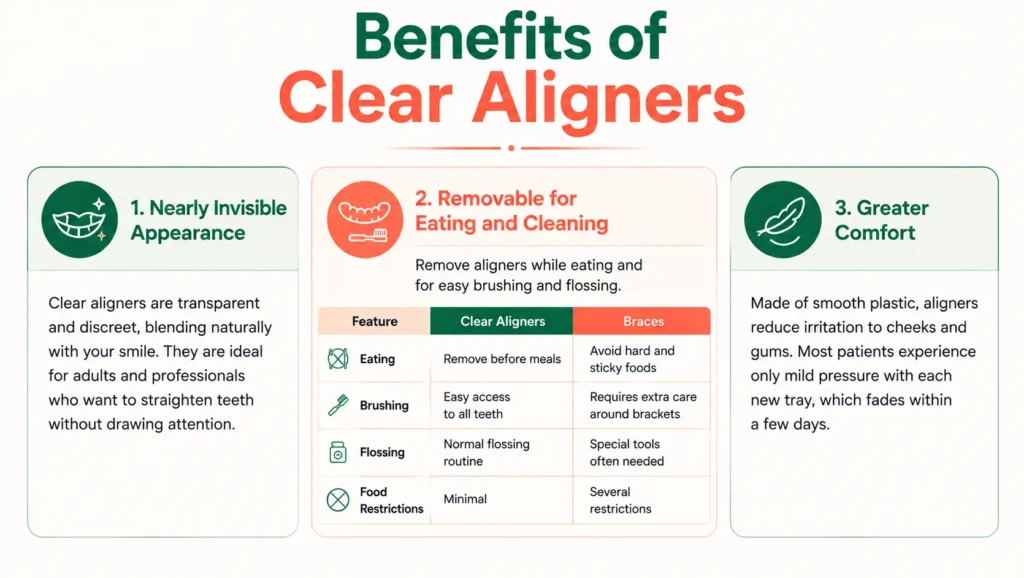
Clear aligners have transformed modern orthodontic treatment by offering a discreet and convenient alternative to traditional braces. They straighten teeth using a series of custom-made transparent trays that gradually move teeth into their ideal positions. For patients exploring clear aligners vs braces, aligners are often appealing because they combine effective teeth straightening with a nearly invisible appearance.Studies show that patient satisfaction rates are often higher with aligners because they combine aesthetics, comfort, and flexibility.Unlike braces, aligners allow you to remove the trays while eating, brushing, and flossing. This feature helps maintain better oral hygiene throughout treatment. Many adults and teenagers also appreciate the nearly invisible appearance of aligners. These advantages are frequently cited among the top clear aligners benefits, especially for patients seeking convenience and flexibility. For patients with mild to moderate alignment issues, clear aligners provide an effective solution that fits seamlessly into daily life while delivering predictable results.
Your perfect smile starts with the right orthodontic treatment. Visit Peach Dental Clinic for a comprehensive orthodontic assessment and discover whether clear aligners or braces can help you achieve lasting results.
Nearly Invisible Appearance
One of the biggest advantages of clear aligners is their nearly invisible appearance. The transparent trays fit closely over the teeth, making them difficult for others to notice during conversations, meetings, or social events. This discreet design appeals especially to adults and professionals who want to improve their smile without drawing attention to their treatment. When evaluating clear aligners vs braces, appearance is often a deciding factor for patients who prefer a more subtle orthodontic solution.
Research indicates that aesthetics play a major role in orthodontic decision-making, with many patients preferring aligners because they look less noticeable than braces. This preference is one of the most recognized clear aligners benefits, particularly among adults seeking a discreet way to straighten their teeth. Unlike traditional metal brackets and wires, clear aligners blend naturally with your smile. Whether you attend a business presentation, wedding, or family gathering, you can feel confident throughout treatment. For image-conscious patients, clear aligners offer a practical way to straighten teeth while maintaining a professional and natural appearance.
Removable for Eating and Cleaning
Clear aligners offer greater flexibility because you can remove them before meals and oral hygiene routines. Unlike braces, they do not restrict your food choices or complicate daily cleaning habits.
| Feature | Clear Aligners | Traditional Braces |
| Eating | Remove before meals | Avoid hard and sticky foods |
| Brushing | Easy access to all teeth | Requires extra care around brackets |
| Flossing | Normal flossing routine | Special tools often needed |
| Food Restrictions | Minimal | Several restrictions |
Studies show that patients with removable aligners often find oral hygiene easier to maintain during treatment. You can enjoy foods such as popcorn, nuts, and crunchy vegetables without worrying about damaging brackets or wires. This convenience makes aligners particularly attractive for busy adults and teenagers who want a simpler orthodontic experience.
Greater Comfort
Comfort remains one of the main reasons patients choose clear aligners over braces. Aligners use smooth medical-grade plastic instead of metal brackets and wires, which reduces irritation inside the mouth. Many patients experience mild pressure when switching to a new tray, but this sensation usually fades within a few days.
For example:
- An office professional can attend meetings without worrying about brackets rubbing against their cheeks.
- A college student can participate in presentations comfortably without concerns about wire irritation.
- Athletes often prefer aligners because they reduce the risk of mouth injuries during sports.
Studies comparing orthodontic treatments have found that aligner patients frequently report lower discomfort levels during the early stages of treatment. While every orthodontic option requires adjustment, clear aligners generally provide a smoother and more comfortable experience for daily wear.
Benefits of Traditional Braces
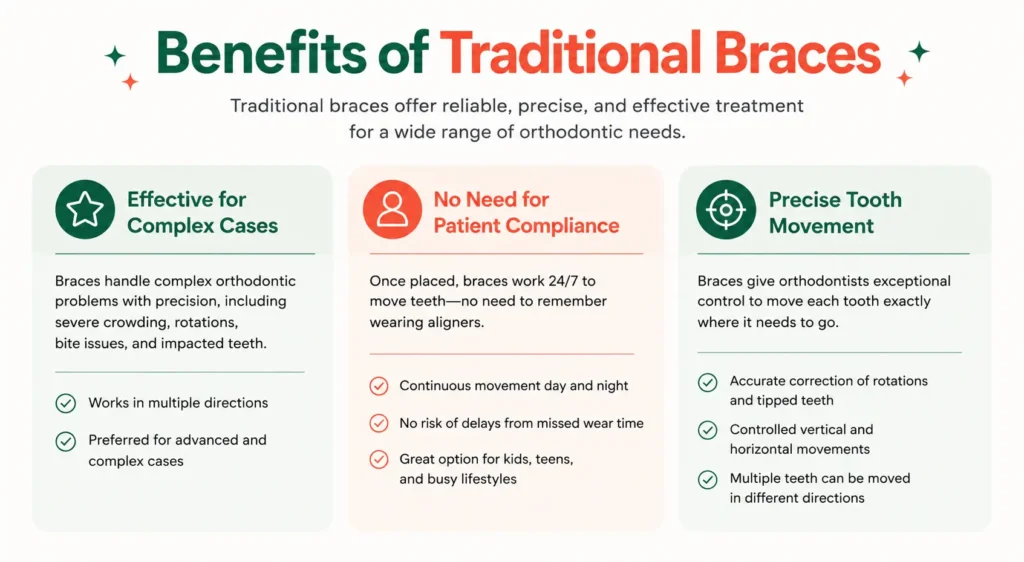
Traditional braces remain one of the most trusted orthodontic treatments for correcting teeth alignment and bite problems. Orthodontists have used braces successfully for decades to treat mild, moderate, and severe dental issues. Unlike removable aligners, braces work continuously because they stay attached to the teeth throughout treatment. This constant force helps achieve predictable results, especially in complex cases. Research shows that braces can effectively correct severe crowding, tooth rotations, and jaw alignment issues that may challenge clear aligners. Many patients also appreciate that braces do not rely on daily wear compliance. For individuals with significant orthodontic concerns, traditional braces offer a reliable, precise, and highly effective path to a healthier smile.
Effective for Complex Cases
Traditional braces excel when treating complex orthodontic problems. Orthodontists can use brackets, wires, and specialized appliances to move teeth in multiple directions with exceptional control. This flexibility allows braces to address severe crowding, large gaps, impacted teeth, and significant bite issues more effectively than many removable aligner systems.
No Need for Patient Compliance
One major advantage of braces is that treatment does not depend heavily on patient discipline. Once the orthodontist places the braces, they work around the clock to move teeth into the correct position.
Benefits of fixed braces include:
- No need to remember wearing trays for 20–22 hours daily.
- Continuous tooth movement throughout the day and night.
- Reduced risk of treatment delays caused by missed wear time.
- Better suitability for younger patients and teenagers.
- Consistent progress regardless of busy schedules.
Clear aligners require strict adherence to wear instructions, while braces continue working automatically. For example, a teenager who frequently forgets to wear aligners may experience slower progress, but braces maintain steady tooth movement without interruption. This built-in consistency makes braces a dependable option for many orthodontic patients.
Precise Tooth Movement
Traditional braces provide orthodontists with exceptional control over tooth movement. The combination of brackets, archwires, and adjustments allows precise positioning of each tooth throughout treatment. This level of control becomes especially important when correcting complex alignment issues.
For example:
- A severely rotated canine tooth may require targeted movement that braces can deliver accurately.
- Patients with deep bites often need controlled vertical tooth movement to improve jaw alignment.
- Severe crowding may require multiple teeth to move simultaneously in different directions.
Because braces remain attached to the teeth, orthodontists can fine-tune movements during regular appointments. Research shows that fixed appliances often achieve highly predictable outcomes in complex orthodontic cases. When treatment requires detailed adjustments and maximum precision, traditional braces continue to set the standard for effective tooth movement and long-term alignment success.
Which Option Is More Comfortable?
Comfort often influences the decision between clear aligners and braces. Both treatments apply pressure to move teeth, but patients usually experience comfort differently. Clear aligners use smooth plastic trays that reduce irritation to the cheeks and gums. Traditional braces include brackets and wires that may cause soreness, especially after adjustments. Studies have shown that aligner patients frequently report lower discomfort levels during the first weeks of treatment. These findings are often highlighted when discussing clear aligners benefits, particularly for patients seeking a more comfortable orthodontic experience. However, braces remain manageable for most patients after a short adaptation period. For those evaluating clear aligners vs braces, comfort should be considered alongside factors such as treatment complexity, effectiveness, and lifestyle preferences. While clear aligners generally offer a more comfortable experience, both options can successfully straighten teeth with temporary and manageable discomfort.
Initial Adjustment Period
Every orthodontic treatment requires an adjustment period. During the first few days, patients often notice pressure as teeth begin to shift into new positions. Clear aligners typically create mild tightness when a new tray is inserted, while braces may cause soreness after placement or wire adjustments. For those comparing clear aligners vs braces, understanding these initial sensations can help set realistic expectations for the treatment journey.
Pain and Discomfort Levels
Both clear aligners and braces create temporary discomfort because tooth movement requires controlled pressure. However, the intensity and source of discomfort often differ.
| Factor | Clear Aligners | Traditional Braces |
| Initial Pressure | Mild to moderate | Moderate |
| Mouth Irritation | Minimal | More common |
| Adjustment Discomfort | New tray changes | Wire tightening appointments |
| Emergency Issues | Rare | Broken wires or brackets |
| Overall Comfort | Generally higher | Moderate |
Studies indicate that aligner patients often report lower pain levels during the early stages of treatment. Clear aligners distribute force evenly across the teeth, while braces can create localized pressure after adjustments. This difference is often discussed by patients researching which is better aligners or braces, particularly when comfort is a top priority. Despite these differences, most patients find that discomfort decreases significantly after the first few weeks of treatment.
Speech Adaptation
Speech changes can occur with both aligners and braces, but most patients adjust quickly. Clear aligners cover the teeth with thin plastic trays, which may temporarily affect the pronunciation of sounds such as “s” and “sh.” Traditional braces rarely alter speech significantly, although some patients notice minor changes during the first few days. For patients comparing clear aligners vs braces, these speech adjustments are typically short-term and improve as the mouth adapts to the appliance.
For example:
- A business professional may notice a slight lisp during presentations after starting aligner treatment.
- A student giving classroom presentations may need a few days to adapt to new speech patterns.
- A teenager with braces may initially feel aware of brackets while speaking but often adjusts within a week.
Research shows that most speech changes disappear as the tongue adapts to the new appliance. This adjustment period is usually temporary, regardless of whether you choose clear aligners or braces for your orthodontic treatment. Reading aloud and practicing conversations can speed up the adjustment process and help patients regain normal speech confidence quickly.
Conclusion
When comparing clear aligners vs braces, there is no one-size-fits-all answer. Clear aligners offer a discreet appearance, greater convenience, and easier oral hygiene, making them an excellent choice for many adults and teens. These features are among the most valued clear aligners benefits for patients seeking a flexible orthodontic solution. Traditional braces provide unmatched precision and remain the preferred option for complex orthodontic cases, severe crowding, and significant bite corrections.The right treatment depends on several factors, including your dental condition, lifestyle, treatment goals, and budget. For anyone wondering which is better aligners or braces, the answer varies based on individual needs and the complexity of the orthodontic issue. A professional orthodontic evaluation can help determine which option will deliver the best long-term results for your smile.
Ready to transform your smile? Schedule a consultation with an experienced orthodontist today. A personalized assessment can help you choose between clear aligners and braces and start your journey toward healthier, straighter teeth with confidence.
FAQS:
1. Which is better: clear aligners or braces?
Both are effective, but the right choice depends on your dental condition, lifestyle, and treatment goals. Mild to moderate cases often respond well to aligners, while complex cases may benefit more from braces.
2. Are clear aligners faster than braces?
Treatment time varies by case complexity. Clear aligners may work faster for minor corrections, while braces can be more effective for severe orthodontic issues.
3. Do clear aligners hurt less than braces?
Most patients find aligners more comfortable because they have smooth edges and no metal brackets or wires that can irritate the mouth.
4. Are braces more effective for severe misalignment?
Yes. Traditional braces are often recommended for complex bite problems, severe crowding, and significant tooth movements.
5. Can I eat normally with clear aligners?
Yes. Since aligners are removable, you can eat your favorite foods after taking them out and brushing before reinserting them.
6. Which treatment is easier to maintain?
Clear aligners are generally easier to maintain because they can be removed for brushing and flossing, making oral hygiene more convenient.
7. Are clear aligners more expensive than braces?
Costs vary depending on the treatment plan and complexity. In many cases, clear aligners may cost slightly more due to their customized design and technology.
8. Do braces require more dental visits?
Typically, yes. Braces require periodic adjustments, while aligner patients often need fewer in-office visits.
9. Can adults choose braces instead of aligners?
Absolutely. Many adults choose braces for complex corrections, while others prefer aligners for their discreet appearance.
10. How do I know which option is right for me?
A consultation with an orthodontist is the best way to determine whether clear aligners or braces will deliver the safest and most effective results for your specific needs.