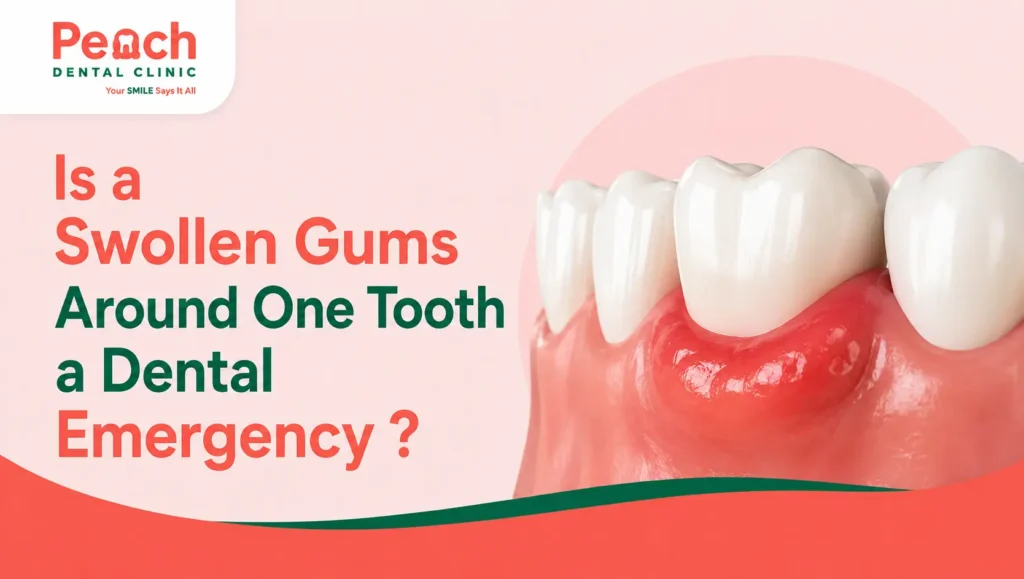
Introduction
While the problem may result from something as simple as trapped food debris, it can also signal a more serious issue such as a gum infection, dental abscess, or periodontal disease. According to the CDC, about 4 in 10 adults aged 30 years and older have some form of periodontitis, a condition that can damage the gums and supporting bone if left untreated. Additionally, the World Health Organization reports that severe periodontal disease affects more than 1 billion people worldwide.
Common Causes of Swollen Gums Around One Tooth
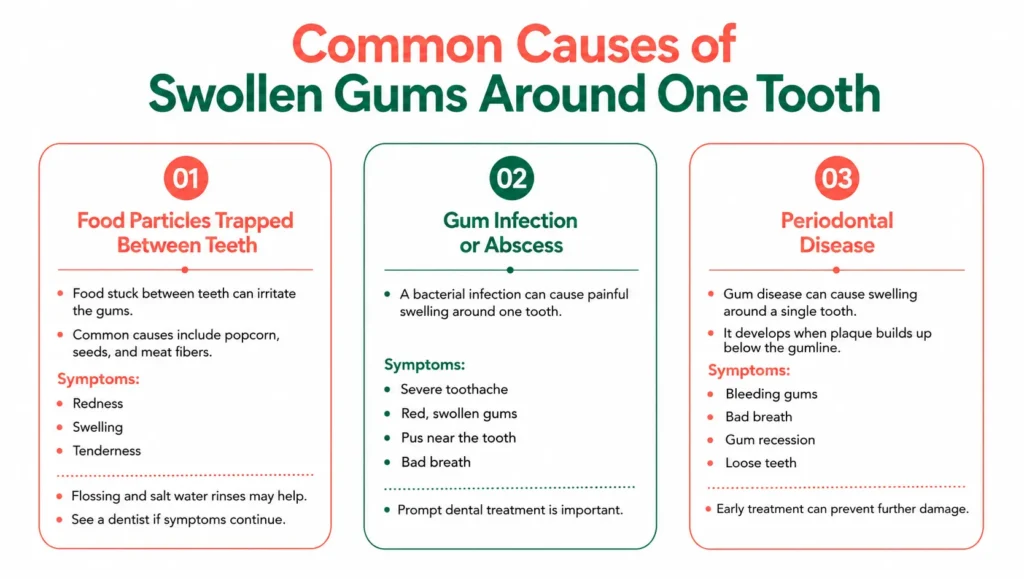
In many cases, food debris, plaque buildup, or poor oral hygiene irritates the gum tissue and triggers inflammation. More serious causes include gum infections, dental abscesses, tooth decay, impacted wisdom teeth, and periodontal disease. According to the CDC, nearly 42% of adults aged 30 years and older have some form of gum disease. When swelling affects only one tooth, it often points to a localized problem that needs attention. Identifying the exact cause early helps prevent complications such as infection spread, bone loss, and tooth damage while improving treatment outcomes.
Food Particles Trapped Between Teeth
Small pieces of meat, popcorn hulls, seeds, or fibrous foods can become lodged near the gumline and irritate the surrounding tissue. Your body responds by sending inflammatory cells to the area, which leads to redness, tenderness, and swelling.
Research published in the Journal of Clinical Periodontology shows that plaque accumulation and food retention significantly increase the risk of localized gum inflammation. If you leave trapped debris in place, bacteria can multiply and worsen the irritation. You can often reduce mild swelling by flossing carefully, brushing gently, and rinsing with warm salt water. However, persistent discomfort may indicate an underlying dental issue that requires professional evaluation.
Gum Infection or Abscess
A gum infection or dental abscess can cause sudden and painful swelling around a single tooth. This condition develops when bacteria enter the gums or tooth root and create a pocket of infection. Without prompt treatment, the infection can spread to nearby tissues and lead to serious complications.
Common signs of a gum infection or abscess include:
- Severe throbbing toothache
- Swollen, red, or tender gums
- Pus discharge near the affected tooth
- Persistent bad breath
- Sensitivity to hot and cold foods
- Swelling in the face or jaw
The American Association of Endodontists reports that dental infections often require immediate treatment to prevent further damage. If you notice these symptoms, contact a dentist as soon as possible to protect your oral health.
Periodontal Disease
The condition usually begins as gingivitis and can progress into periodontitis if left untreated. The CDC estimates that nearly 42% of adults aged 30 years and older have periodontitis.
For example, plaque buildup around a molar may trigger localized gum inflammation. In another case, untreated gingivitis near a single tooth can create deep gum pockets that trap bacteria and worsen swelling. As the disease progresses, patients may experience bleeding gums, gum recession, bad breath, and loose teeth. Early treatment through professional cleaning and improved oral hygiene can help stop the disease and protect the bone and tissues that support your teeth.
Is Swollen Gums Around One Tooth a Dental Emergency?
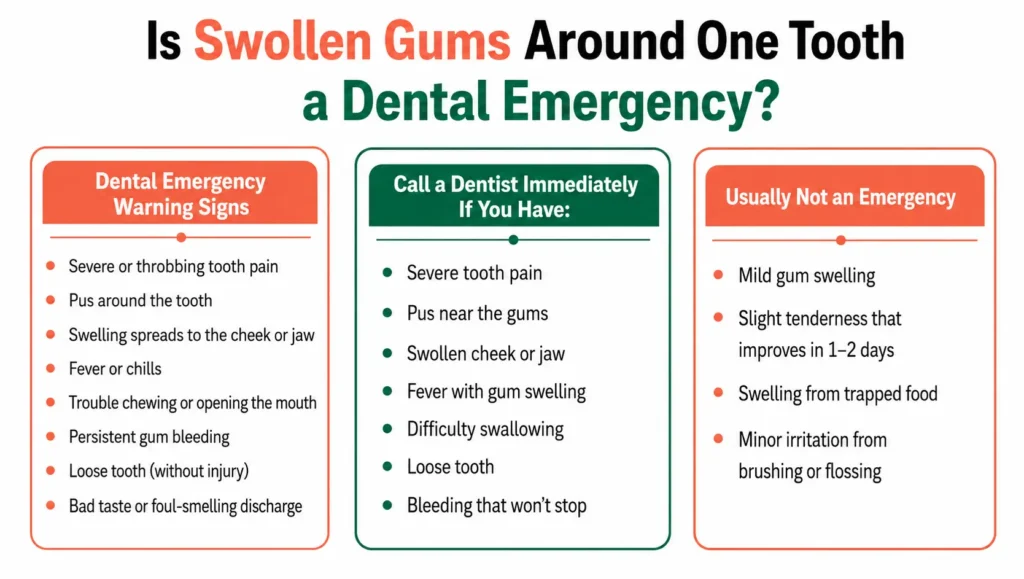
The severity often depends on the underlying cause. A trapped food particle may cause temporary irritation, while a gum abscess, severe infection, or advanced periodontal disease can require immediate treatment. According to the CDC, nearly 42% of adults aged 30 and older have some form of periodontitis, which can increase the risk of serious gum complications. If swollen gums around one tooth occur alongside pain, pus, fever, or facial swelling, contact a dentist promptly. Early treatment can prevent infection spread, tooth loss, and costly procedures.
Concerned About Swollen Gums Around One Tooth?
Early diagnosis can help prevent infection, protect your teeth, and reduce the need for more extensive treatment. The experienced team at The PEACH DENTAL CARE can identify the cause and recommend the right solution for lasting oral health. Book your dental consultation today and get the expert care your smile deserves.
Signs It May Be a Dental Emergency
These warning signs often indicate an active infection or serious damage that can worsen without treatment. Research shows that untreated dental infections can spread beyond the mouth and affect overall health.
Watch for the following signs:
- Severe or throbbing tooth pain
- Pus around the affected tooth
- Swelling that spreads to the cheek or jaw
- Fever or chills
- Difficulty chewing or opening the mouth
- Persistent bleeding from the gums
- A loose tooth without injury
- Bad taste or foul-smelling discharge
If swollen gums around one tooth occur with any of these symptoms, seek professional dental care immediately to prevent complications and protect your oral health.
When Should You Call a Dentist Immediately
Quick treatment can prevent the problem from affecting nearby teeth, gums, and bone structures. The American Dental Association recommends prompt evaluation for symptoms that indicate a dental emergency.
| Symptom | Why You Should Act Quickly |
| Severe tooth pain | May indicate an abscess or deep infection |
| Pus near the gumline | Signals a bacterial infection |
| Facial or jaw swelling | Infection may be spreading |
| Fever with gum swelling | Shows the body is fighting infection |
| Difficulty swallowing | Requires urgent medical attention |
| Loose tooth | May indicate advanced gum disease |
| Persistent bleeding | Could signal significant gum damage |
Contact your dentist immediately if you experience any of these symptoms.
Signs It May Not Be an Immediate Emergency
Not every case of swollen gums around one tooth requires emergency treatment. Mild swelling often results from temporary irritation and may improve with proper oral hygiene. However, you should continue monitoring the area closely.
For example, a popcorn husk stuck between two teeth can irritate the gum and cause localized swelling. Similarly, brushing too aggressively around one tooth may lead to temporary redness and tenderness. Minor swelling after a dental cleaning can also occur for a short period.
Signs that usually do not indicate an immediate emergency include:
- Mild swelling without severe pain
- Slight tenderness that improves within a day or two
- Temporary irritation from trapped food
- Minor gum injury from brushing or flossing
If symptoms persist for more than 48 hours or worsen, schedule a dental appointment for evaluation.
How Dentists Diagnose Swollen Gums Around One Tooth
When patients visit a clinic with swollen gums around one tooth, dentists focus on identifying the exact cause rather than treating only the symptoms. Accurate diagnosis helps determine whether the problem stems from trapped food, gum disease, a dental abscess, or tooth decay. According to the CDC, nearly 42% of adults aged 30 years and older have periodontitis, making gum-related conditions a common concern. Dentists typically combine a clinical examination, digital dental X-rays, and periodontal assessments to evaluate the affected area. This thorough approach helps detect hidden infections, assess gum health, and create an effective treatment plan before complications develop.
Clinical Examination
A clinical examination serves as the first step in diagnosing swollen gums around one tooth. During the visit, the dentist carefully inspects the gums, teeth, and surrounding tissues to identify signs of inflammation, infection, or injury. They look for redness, swelling, bleeding, pus discharge, and areas of tenderness.
The dentist also checks for plaque buildup, cavities, cracked teeth, and food particles lodged between teeth. In many cases, these visible clues help narrow down the cause quickly. Research published in the Journal of Periodontology highlights that early clinical detection of gum disease improves treatment outcomes and reduces the risk of tooth loss. By identifying the source of swollen gums around one tooth early, dentists can recommend targeted treatment and prevent the condition from progressing.
Digital Dental X-Rays
Digital dental X-rays provide valuable information that a visual examination cannot reveal. When swollen gums around one tooth persist, dentists often use X-rays to check the structures beneath the gumline and identify hidden problems.
Digital X-rays can help detect:
- Tooth decay below the surface
- Dental abscesses near the root
- Bone loss caused by gum disease
- Impacted teeth
- Cracks or fractures in the tooth
- Infection spreading to surrounding tissues
The American Dental Association notes that digital X-rays use significantly less radiation than traditional film-based X-rays while delivering highly detailed images. These images allow dentists to diagnose the root cause of swollen gums around one tooth accurately and develop a treatment plan that addresses the underlying problem rather than just the symptoms.
Periodontal Assessment
A periodontal assessment helps dentists evaluate the health of the gums and supporting structures around the affected tooth. This examination becomes especially important when swollen gums around one tooth may relate to gum disease. The dentist uses a periodontal probe to measure the depth of gum pockets and check for signs of tissue damage.
For example, a patient with a 2–3 mm pocket depth typically has healthy gums, while deeper pockets may indicate periodontitis. Another example involves localized swelling around a molar, where probing may reveal bacteria trapped beneath the gumline. According to the CDC, periodontitis affects nearly 42% of adults aged 30 and older. By measuring gum health accurately, dentists can identify disease severity early and recommend treatments that protect both the gums and underlying bone.
Treatment Options for Swollen Gums Around One Tooth
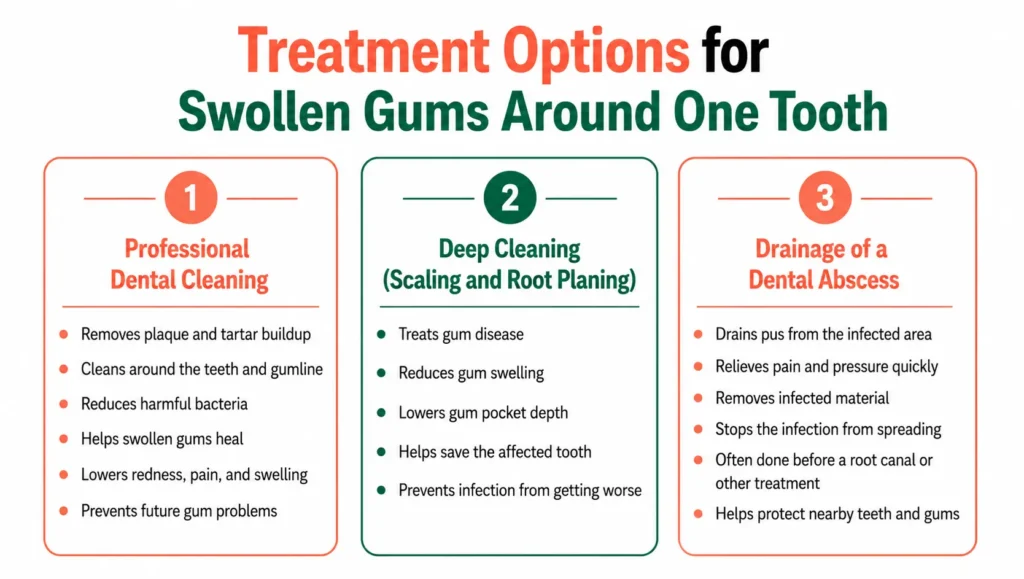
The best treatment for swollen gums around one tooth depends on the underlying cause. Dentists first identify whether the swelling results from plaque buildup, gum disease, infection, trapped food, or tooth decay. Early treatment often prevents complications such as bone loss, tooth mobility, and infection spread. According to the CDC, nearly 42% of adults aged 30 years and older have periodontitis, making professional gum treatment a common need. Dentists may recommend professional cleaning, deep cleaning procedures, abscess drainage, root canal therapy, or other targeted treatments. Addressing swollen gums around one tooth promptly improves oral health and reduces the risk of more complex dental problems.
Professional Dental Cleaning
Professional dental cleaning often serves as the first line of treatment for swollen gums around one tooth caused by plaque and tartar buildup. Even with regular brushing and flossing, plaque can harden into tartar in hard-to-reach areas. Once tartar forms, only a dental professional can remove it effectively.
During the procedure, the dentist or dental hygienist removes plaque deposits, tartar accumulation, and surface stains from the teeth and gumline. This process reduces bacterial growth and helps the inflamed gums heal naturally. The American Dental Association recommends routine dental cleanings to maintain gum health and prevent gum disease. Many patients notice less redness, tenderness, and swelling within days after treatment.
Deep Cleaning (Scaling and Root Planing)
result from periodontal disease, dentists often recommend scaling and root planing. This deep cleaning procedure removes bacteria, plaque, and tartar from below the gumline while smoothing the tooth roots to encourage gum reattachment.
| Procedure | Purpose |
| Scaling | Removes plaque and tartar from tooth surfaces and gum pockets |
| Root Planing | Smooths root surfaces and reduces bacterial buildup |
| Gum Pocket Reduction | Helps gums reattach to the teeth |
| Infection Control | Lowers bacterial activity and inflammation |
Research published by the American Academy of Periodontology shows that scaling and root planing can significantly reduce pocket depth and gum inflammation. Patients with swollen gums around one tooth often experience noticeable improvement after treatment, especially when they maintain good oral hygiene habits.
Drainage of a Dental Abscess
When infection creates a pocket of pus, dentists may perform abscess drainage to relieve pressure and remove infected material. This procedure helps reduce pain quickly and limits the spread of infection.
For example, a patient with a visible pus-filled swelling near a molar may experience immediate relief after drainage. In another case, a deep infection around a tooth root may require drainage before additional treatment such as a root canal. The American Association of Endodontists warns that untreated dental infections can spread to nearby tissues and become more serious. By draining the abscess and eliminating the infection source, dentists can help restore oral health and protect surrounding teeth and gums.
Conclusion
may seem like a minor issue, but they can signal anything from trapped food debris to a serious dental infection or advanced gum disease. Understanding the possible causes, warning signs, diagnostic methods, and treatment options helps you make informed decisions about your oral health. The key is to act early. Prompt attention can prevent infection from spreading, protect the supporting bone and tissues, and reduce the risk of tooth loss. If persist, worsen, or occur alongside pain, pus, fever, or facial swelling, do not delay treatment. Schedule a dental consultation today to identify the cause, receive expert care, and restore your healthy, confident smile.
Get Expert Treatment for Swollen Gums Around One Tooth
may indicate an infection, gum disease, or another underlying dental problem that requires professional care. At The PEACH DENTAL CARE, our team provides comprehensive examinations and personalized treatment plans to address the root cause and restore your oral health. Schedule an appointment today and take the first step toward a healthier, pain-free smile.
Frequently Asked Questions :
1. What causes swollen gums around one tooth?
trapped food particles, plaque buildup, gum disease, tooth decay, a dental abscess, or an impacted wisdom tooth. A dental examination can identify the exact cause and guide appropriate treatment.
2. Is swollen gums around one tooth a dental emergency?
dental emergency if they occur with severe pain, pus discharge, fever, facial swelling, or difficulty swallowing. These symptoms often indicate an infection that requires immediate attention.
3. Can swollen gums around one tooth go away on their own?
Mild cases caused by temporary irritation or trapped food may improve with proper oral hygiene. usually require professional evaluation to address the underlying problem.
4. How long should swollen gums around one tooth last?
Most minor gum irritation improves within a few days. persist for more than 48–72 hours or worsen over time, schedule a dental appointment immediately.
5. Can a tooth infection cause swollen gums around one tooth?
Yes. A tooth infection or dental abscess is one of the most common causes . Infections can spread if left untreated, making early diagnosis important.
6. What are the warning signs that swollen gums around one tooth need urgent treatment?
Signs that require prompt dental care include severe pain, pus around the tooth, facial swelling, fever, a loose tooth, bad taste in the mouth, or difficulty chewing and swallowing.
7. How do dentists diagnose swollen gums around one tooth?
Dentists diagnose through a clinical examination, digital dental X-rays, and periodontal assessments. These evaluations help identify infections, gum disease, bone loss, or tooth damage.
8. What treatments are available for swollen gums around one tooth?
Treatment depends on the cause and may include professional dental cleaning, scaling and root planing, abscess drainage, root canal treatment, antibiotics, or tooth extraction in severe cases.
9. Can gum disease affect only one tooth?
Yes. Early-stage periodontal disease can sometimes affect , especially when plaque and bacteria accumulate in one area. Early treatment can help prevent progression.
10. How can I prevent swollen gums around one tooth?
You can reduce the risk by brushing twice daily, flossing regularly, attending routine dental check-ups, and seeking treatment promptly for cavities, gum problems, or dental infections.