Introduction
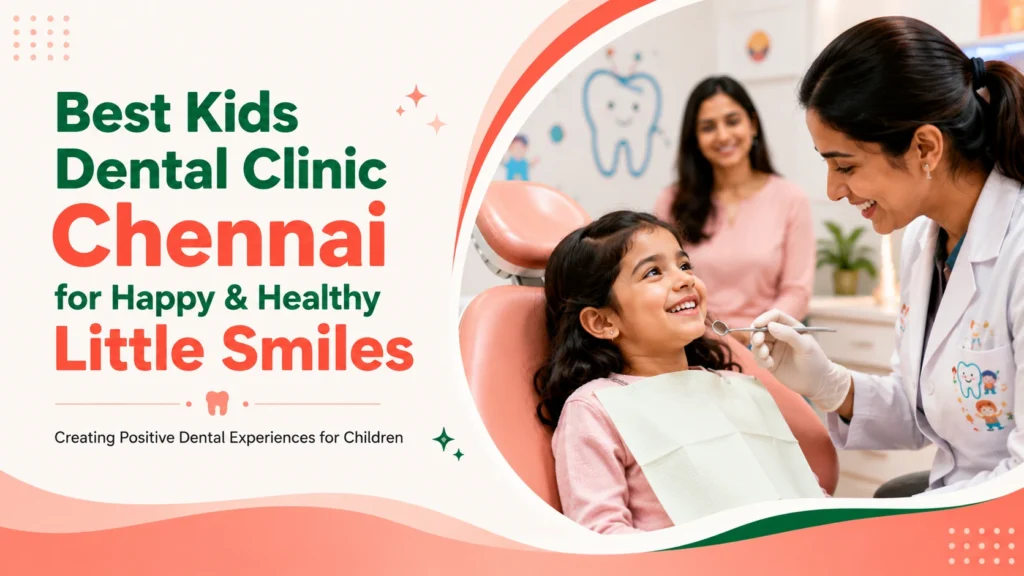
Children often feel nervous or scared during dental visits, making it difficult for parents to find the right dental clinic that offers gentle and child-friendly care. Ignoring early dental problems such as cavities, tooth pain, or misaligned teeth can affect a child’s oral development, eating habits, speech, and overall confidence. This is why choosing the best kids dental clinic in Chennai plays an important role in maintaining healthy smiles from an early age.
A specialized pediatric dental clinic creates a comfortable environment where children feel safe, relaxed, and supported throughout treatment. Experienced pediatric dentists use child-friendly techniques, preventive care, and advanced technology to make dental visits stress-free and effective. From routine checkups and fluoride treatments to cavity care and orthodontic guidance, early dental care helps prevent long-term oral health problems. In this guide, explore how to choose the best kids dental clinic in Chennai and why pediatric dental care matters for your child’s healthy smile and confidence.
Why Pediatric Dental Care Is Important
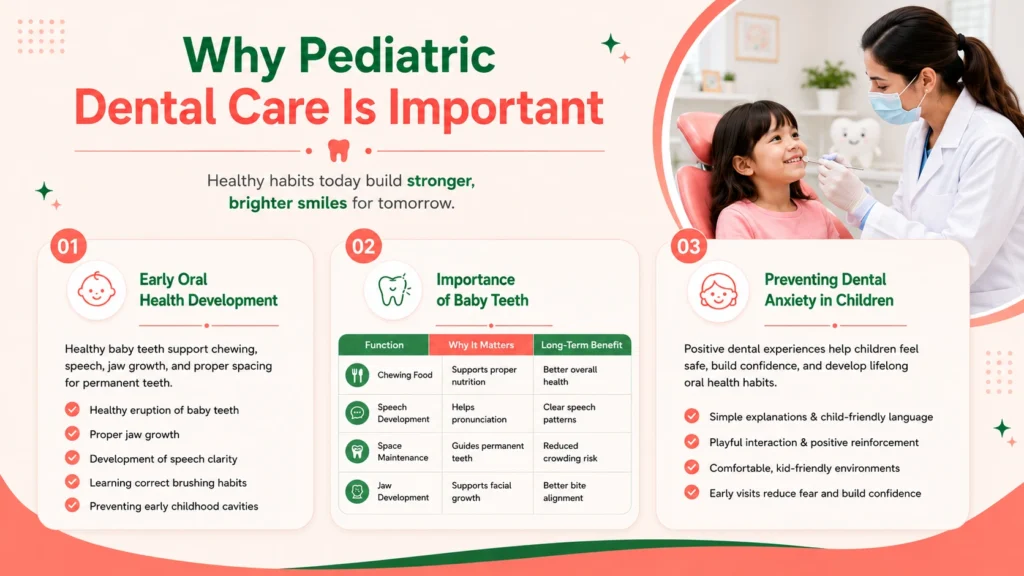
Pediatric dental care plays an essential role in maintaining healthy teeth, gums, and oral development during childhood. Many parents assume baby teeth do not require much attention because permanent teeth eventually replace them. However, poor oral care during childhood can lead to cavities, gum problems, difficulty chewing, speech issues, and future orthodontic complications.
Regular pediatric dental visits help dentists monitor tooth development, identify early dental problems, and guide children toward healthy oral hygiene habits. Studies show that children who receive preventive dental care at an early age often experience fewer cavities and better long-term oral health.
Early Oral Health Development
Early oral health development begins during infancy and continues throughout childhood. Healthy baby teeth support chewing, speech development, jaw growth, and proper spacing for permanent teeth. Pediatric dentists monitor this development closely to ensure teeth erupt correctly and oral habits do not create future problems.
Children can develop cavities soon after baby teeth appear, especially when sugary foods, poor brushing habits, or bottle-feeding at bedtime become common. Early dental visits help parents understand proper oral care routines and preventive strategies.
Important aspects of early oral health development include:
- Healthy eruption of baby teeth
- Proper jaw growth
- Development of speech clarity
- Learning correct brushing habits
- Monitoring thumb sucking habits
- Preventing early childhood cavities
Importance of Baby Teeth
Baby teeth play a much more important role than many parents realize. They help children chew food properly, speak clearly, and maintain space for permanent teeth. Healthy baby teeth also support normal jaw development and facial growth during childhood.
| Function of BabyTeeth | Why It Matters | Long-Term Benefit |
| Chewing Food | Supports proper nutrition | Better overall health |
| Speech Development | Helps pronunciation | Clear speech patterns |
| Space Maintenance | Guides permanent teeth | Reduced crowding risk |
| Jaw Development | Supports facial growth | Better bite alignment |
Preventing Dental Anxiety in Children
Preventing dental anxiety in children helps create positive dental experiences and encourages lifelong oral health habits. Many children feel nervous about dental visits because they fear pain, unfamiliar equipment, or strange clinical environments. Pediatric dental clinics use child-friendly approaches to help children feel safe and comfortable during treatment.
Friendly communication, gentle care, and positive reinforcement play important roles in reducing fear during dental visits.
Pediatric dentists often use:
- Simple explanations
- Playful interaction
- Child-friendly language
- Reward-based encouragement
- Comfortable treatment environments
For example, dentists may describe dental tools using fun names to make children feel less intimidated. Some clinics also use colorful interiors, cartoons, or toys to create a more relaxed atmosphere.
Parents also influence dental anxiety levels. Children often feel calmer when parents speak positively about dental visits instead of using fear-based words like “pain” or “injection.”
Early preventive visits usually help children become familiar with the dental environment before major treatment becomes necessary. A child who regularly attends comfortable dental checkups often develops more confidence and cooperation during future appointments.
Positive dental experiences during childhood can reduce long-term dental fear and encourage healthier oral care habits throughout adulthood.
What Makes a Good Kids Dental Clinic?
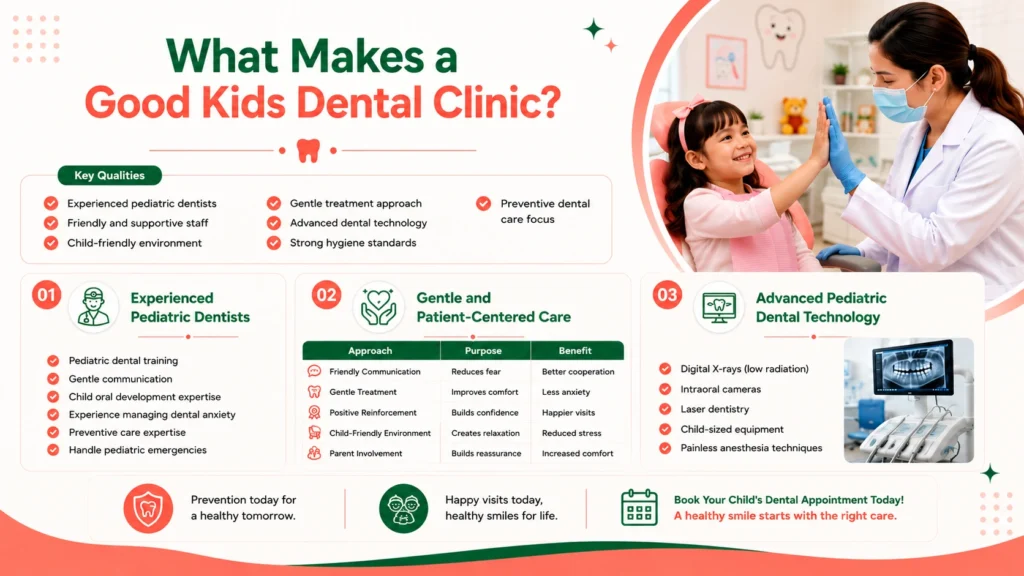
A good kids dental clinic creates a safe, friendly, and comfortable environment where children feel relaxed during dental visits. Pediatric dental clinics focus not only on treatment but also on building positive dental experiences that encourage children to maintain healthy oral habits for life.
Experienced pediatric dentists understand child behavior, dental development, and communication techniques suitable for different age groups. Child-friendly clinics also use gentle treatment methods and modern technology to reduce fear and improve treatment comfort.
Important qualities of a good kids dental clinic include:
- Experienced pediatric dentists
- Friendly and supportive staff
- Child-friendly clinic environment
- Gentle treatment approach
- Advanced pediatric dental technology
- Strong hygiene and sterilization standards
- Preventive dental care focus
Experienced Pediatric Dentists
Experienced pediatric dentists specialize in diagnosing and treating dental problems in infants, children, and teenagers. They receive additional training focused on child psychology, tooth development, preventive care, and behavior management techniques.
Children often require different communication styles and treatment approaches compared to adults. Pediatric dentists know how to create a calm and supportive environment that helps children feel safe during dental visits.
Important qualities of experienced pediatric dentists include:
- Specialized pediatric dental training
- Gentle communication skills
- Knowledge of child oral development
- Experience managing dental anxiety
- Preventive care expertise
- Ability to handle emergency pediatric cases
Gentle and Patient-Centered Care
Gentle and patient-centered care helps children feel calm, safe, and comfortable during dental visits. Pediatric dental clinics focus on reducing fear and building trust by using friendly communication, slower treatment pacing, and positive reinforcement techniques.
| Patient-Centered Approach | Purpose | Benefit for Children |
| Friendly Communication | Reduces fear | Better cooperation |
| Gentle Treatment Methods | Improves comfort | Less anxiety |
| Positive Reinforcement | Encourages confidence | Happier dental visits |
| Child-Friendly Environment | Creates relaxation | Reduced stress |
| Parent Involvement | Builds reassurance | Increased comfort |
Advanced Pediatric Dental Technology
Advanced pediatric dental technology helps improve treatment accuracy, comfort, and safety for children. Modern kids dental clinics now use specialized equipment designed to make dental procedures faster, gentler, and less stressful for young patients.
Digital X-rays, for example, expose children to lower radiation levels compared to traditional X-rays while helping dentists detect cavities and hidden dental problems earlier. Intraoral cameras also allow dentists and parents to see dental conditions clearly on a screen during consultations.
Many pediatric clinics now use:
- Digital X-rays
- Intraoral cameras
- Laser dentistry
- Child-sized dental equipment
- Painless anesthesia techniques
For example, laser dentistry can help treat certain gum procedures with less bleeding and faster healing, making treatment more comfortable for children.
Modern dental chairs and child-friendly tools also help reduce fear during appointments. Some clinics even use entertainment systems such as cartoons or ceiling-mounted screens to distract children during treatment.
Advanced technology supports early diagnosis, precise treatment planning, and improved patient comfort. Clinics that invest in modern pediatric dental equipment often provide more efficient and child-friendly care experiences for both children and parents.
Tips for Parents Before a Child’s Dental Visit
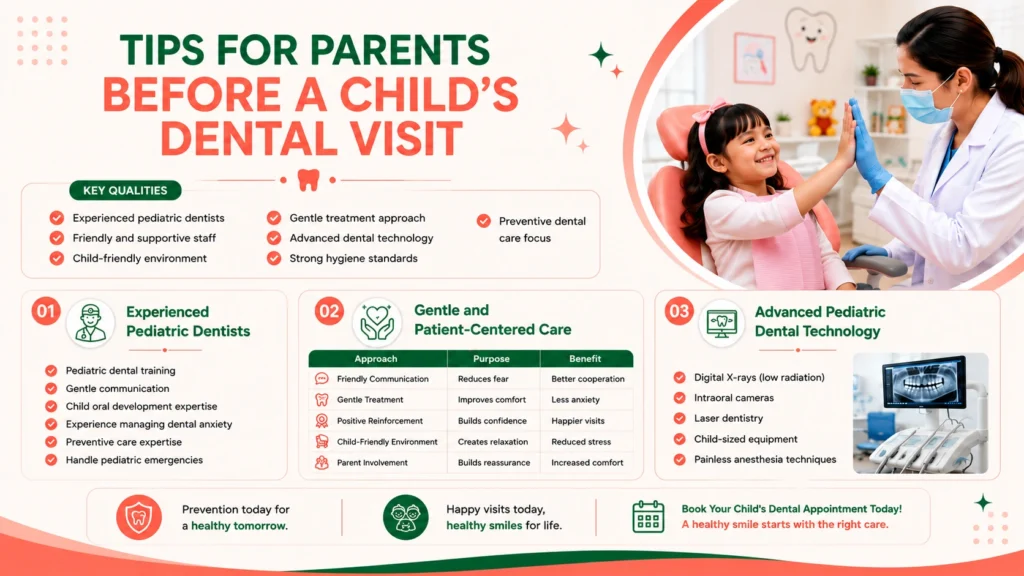
Preparing children properly before a dental visit can make the experience smoother, calmer, and less stressful for both parents and children. Many children feel anxious about dental appointments because they fear unfamiliar sounds, equipment, or procedures. Positive preparation helps reduce fear and improves cooperation during treatment.
Parents play an important role in shaping a child’s attitude toward dental care. Calm communication, supportive behavior, and simple explanations often help children feel more comfortable before the appointment.
Helpful tips for parents include:
- Speak positively about the dentist
- Avoid scary or negative words
- Schedule appointments at convenient times
- Encourage children to ask questions
- Maintain a calm attitude
- Reward children after the visit
Prepare Children Positively
Positive preparation helps children feel safer and more confident before visiting the dentist. Children often react based on their parents’ emotions and words, so calm and encouraging communication can significantly reduce dental anxiety.
Parents should explain dental visits in a simple and friendly way without overwhelming children with unnecessary details. Using positive language helps children view the dentist as someone who helps keep their teeth healthy and strong.
Helpful ways to prepare children positively include:
- Talk about the dentist calmly
- Use simple and cheerful explanations
- Read storybooks about dental visits
- Watch child-friendly dental videos
- Praise children for being brave
- Answer questions honestly and gently
Avoid Fear-Based Language
The words parents use before a dental visit can strongly influence a child’s emotions and behavior. Fear-based language may increase anxiety even before the child enters the dental clinic. Children often imagine situations worse than reality when they hear negative or frightening words.
| Fear-Based Phrase | Negative Impact | Better Alternative |
| “It won’t hurt” | Creates fear about pain | “The dentist will help your teeth stay healthy” |
| “Don’t be scared” | Suggests something scary | “The dentist is very friendly” |
| “You need an injection” | Increases anxiety | “The dentist will clean your teeth gently” |
| “Be brave” | Implies danger | “You’ll do great today” |
Schedule Morning Appointments
Morning dental appointments often work best for children because they usually feel more rested, calm, and cooperative earlier in the day. Fatigue, hunger, or overstimulation later in the day can increase irritability and make dental visits more difficult for both children and parents.
Young children especially tend to have better attention spans and emotional control during morning hours. Pediatric dentists frequently recommend scheduling appointments soon after breakfast when children feel relaxed and energetic.
For example, a child attending an afternoon appointment after school may already feel tired, hungry, or emotionally overwhelmed from daily activities. In contrast, morning visits often allow children to approach treatment with a fresher and calmer mindset.
Parents can also use morning appointments to maintain regular routines and reduce waiting-related stress. Feeding children a light meal before the appointment may additionally improve comfort and cooperation during treatment.
Morning scheduling becomes especially helpful for longer procedures such as cavity fillings or preventive dental treatments. Children who feel comfortable and relaxed during appointments often develop more positive attitudes toward future dental care.
Planning appointments at the right time can significantly improve the overall pediatric dental experience and reduce unnecessary anxiety.
Conclusion
Choosing the best kids dental clinic in Chennai plays an important role in protecting your child’s oral health, comfort, and confidence. Early pediatric dental care helps prevent cavities, supports healthy tooth development, and encourages strong oral hygiene habits from a young age.
A child-friendly dental clinic with experienced pediatric dentists, gentle care, advanced technology, and a comfortable environment can make dental visits stress-free and positive for children. Regular checkups and preventive care also help identify dental problems early and reduce the need for complex treatments later.
By selecting the right pediatric dental clinic, parents can help their children maintain healthier smiles and develop lifelong confidence in dental care.
FAQ
1. When should my child first visit the dentist?
Dentists usually recommend the first dental visit by the child’s first birthday or within six months after the first tooth appears.
2. How often should children visit the dentist?
Most children should visit the dentist every six months for routine checkups and preventive dental care.
3. Why are baby teeth important?
Baby teeth help children chew properly, speak clearly, and maintain space for permanent teeth.
4. What causes cavities in children?
Frequent sugary foods, poor brushing habits, bottle feeding at bedtime, and inadequate oral hygiene commonly cause cavities in children.
5. How can I reduce my child’s fear of the dentist?
Use positive language, avoid fear-based words, and choose a child-friendly pediatric dental clinic with experienced dentists.
6. Are dental X-rays safe for children?
Yes. Modern digital dental X-rays use very low radiation levels and are generally considered safe for children.
7. What foods help maintain healthy teeth in children?
Foods rich in calcium, fruits, vegetables, dairy products, and plenty of water help support healthy teeth and gums.
8. Can thumb sucking affect teeth alignment?
Yes. Prolonged thumb sucking may affect bite alignment and tooth positioning if the habit continues for many years.
9. What is fluoride treatment for children?
Fluoride treatment strengthens tooth enamel and helps reduce the risk of cavities in children.
10. When should children get an orthodontic evaluation?
Many dentists recommend an orthodontic evaluation around age 7 to identify early bite or alignment problems.