
Introduction
Missing teeth can affect your ability to chew, speak, and smile confidently, making dental implants one of the most effective long-term tooth replacement solutions available today. However, many patients are unsure what to expect after surgery and often wonder how long healing will take. Understanding the dental implant recovery timeline can help reduce anxiety and prepare you for a smoother recovery process. According to the American Academy of Implant Dentistry, dental implants have a success rate of over 95%, making them a highly predictable treatment option. Most patients experience initial healing within 1–2 weeks, while complete bone integration, known as osseointegration, typically takes 3–6 months.This guide explains each stage of the recovery process, common symptoms, healing milestones, and tips to support successful implant healing.
Dental Implant Recovery Timeline: Day-by-Day and Month-by-Month
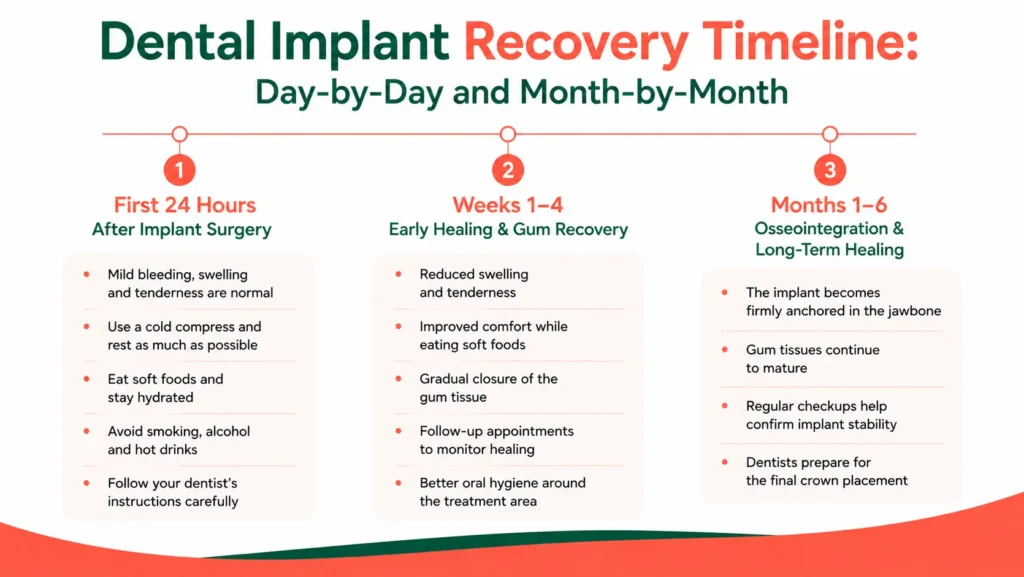
The dental implant recovery timeline follows several healing stages, beginning immediately after surgery and continuing until the implant fully integrates with the jawbone. Most patients notice significant improvement within the first one to two weeks, while complete healing typically takes three to six months. when patients follow proper afte According to clinical studies, dental implants achieve success rates above 95%rcare. During the first few days, the body focuses on repairing gum tissue and reducing inflammation. Over the following months, the jawbone gradually fuses with the implant through a process called osseointegration.Understanding each stage helps patients set realistic expectations and support successful long-term outcomes.
First 24 Hours After Implant Surgery
The first day plays a critical role in the dental implant recovery timeline. Mild bleeding, swelling, and tenderness are common during this period. Research shows that most post-surgical swelling reaches its peak within 48 to 72 hours. Rest as much as possible and avoid strenuous activities that could increase bleeding. Apply a cold compress for 15 to 20 minutes at a time to help control swelling. Stick to soft foods such as yogurt, smoothies, and soup, and drink plenty of water. Avoid smoking, alcohol, and hot beverages because they can slow healing. Follow your dentist’s instructions carefully, take prescribed medications on schedule, and keep the surgical area clean without disturbing the implant site.
Weeks 1–4: Early Healing and Gum Recovery
During weeks one to four, the gums continue to heal and discomfort gradually decreases. Most patients return to their normal routines within a few days, although complete soft tissue healing may take several weeks. This stage of the dental implant recovery timeline focuses on protecting the implant while the surrounding tissues strengthen.
Key healing milestones include:
- Reduced swelling and tenderness
- Improved comfort while eating soft foods
- Gradual closure of the gum tissue around the implant
- Follow-up appointments to monitor healing
- Better oral hygiene around the treatment area
Good oral care remains essential during this period. Patients who maintain proper hygiene and attend follow-up visits often experience smoother recovery and lower complication risks.
Months 1–6: Osseointegration and Long-Term Healing
Months one through six represent the most important phase of the dental implant recovery timeline. During this stage, the jawbone bonds directly with the implant through osseointegration. Studies show that successful osseointegration forms the foundation for long-term implant stability and function.
For example, a patient receiving a single implant in a healthy jawbone may complete osseointegration in about three months. Someone who requires bone grafting or has lower bone density may need closer to six months.
Throughout this period:
- The implant becomes firmly anchored in the jawbone
- Gum tissues continue to mature
- Regular checkups help confirm implant stability
- Dentists prepare for the final crown placement
Once osseointegration is complete, the implant can support a custom restoration that looks and functions like a natural tooth.
How to Speed Up the Dental Implant Recovery Timeline
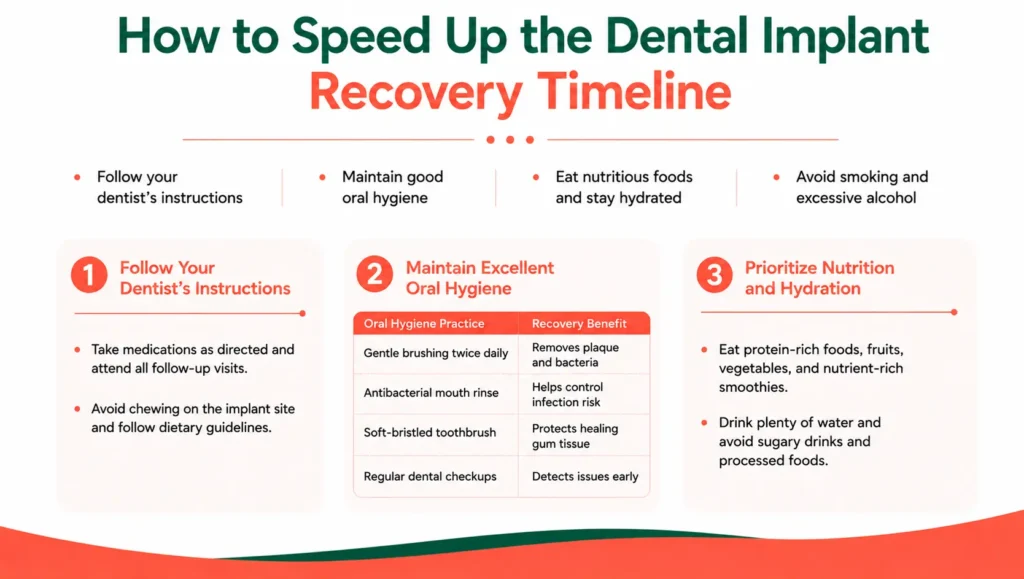
While every patient heals at a different pace, several habits can support a smoother dental implant recovery timeline. Research shows that dental implants have success rates exceeding 95% when patients follow proper aftercare and maintain good oral health. Focus on the basics: follow your dentist’s instructions, keep the surgical area clean, eat nutrient-rich foods, and stay hydrated. Avoid smoking and excessive alcohol consumption, as both can delay healing and increase complication risks.Attend all follow-up appointments so your dentist can monitor progress and address concerns early. Small daily actions can make a significant difference in how quickly and comfortably your implant heals.
Concerned About Your Dental Implant Recovery
Every patient’s healing journey is unique. At PEACH DENTAL CARE, our experienced implant dentists provide personalized treatment planning, advanced implant procedures, and detailed aftercare guidance to help support a smooth recovery and long-term success.
Book a consultation today and discover the right dental implant solution for your smile.
Follow Your Dentist’s Instructions Carefully
Following professional aftercare instructions remains one of the most effective ways to support the dental implant recovery timeline. Your dentist provides guidance based on your specific treatment, health history, and recovery needs. Ignoring recommendations can increase the risk of infection, delayed healing, or implant failure.
Take prescribed medications exactly as directed and attend every follow-up visit. Avoid chewing on the implant site during the early healing phase and follow dietary recommendations carefully. Studies show that patients who comply with post-operative instructions experience fewer complications and better long-term implant outcomes. If you notice unusual symptoms such as persistent pain, swelling, or bleeding, contact your dentist promptly. Consistent care during the first few weeks creates the best foundation for successful healing and long-term implant stability.
Maintain Excellent Oral Hygiene
Good oral hygiene plays a major role in a successful dental implant recovery timeline. Keeping the mouth clean helps reduce harmful bacteria and lowers the risk of infection around the implant site. Research links poor oral hygiene to peri-implant diseases that can affect implant success.
| Oral Hygiene Practice | Recovery Benefit |
| Gentle brushing twice daily | Removes plaque and bacteria |
| Antibacterial mouth rinse | Helps control infection risk |
| Soft-bristled toothbrush | Protects healing gum tissue |
| Daily flossing when advised | Maintains healthy gums |
| Regular dental checkups | Detects issues early |
Clean the treatment area carefully and follow your dentist’s instructions regarding brushing and rinsing. Consistent oral hygiene supports healthy gums and encourages long-term implant success.
Prioritize Nutrition and Hydration
Proper nutrition provides the building blocks needed for tissue repair and bone healing throughout the dental implant recovery timeline. Studies show that protein, vitamins, and minerals play important roles in wound healing and immune function. Staying hydrated also helps maintain healthy tissues and supports overall recovery.
For example, foods such as eggs, yogurt, fish, and soft-cooked vegetables provide protein and essential nutrients without placing stress on the implant site. Smoothies with fruits and leafy greens can increase vitamin intake while remaining easy to consume. Drinking plenty of water throughout the day supports circulation and nutrient delivery to healing tissues. Avoid sugary drinks and highly processed foods whenever possible. A balanced diet helps your body recover more efficiently and supports stronger implant integration.
Signs Your Dental Implant Is Healing Properly
Understanding the signs of healthy healing can make the dental implant recovery timeline less stressful. Most patients notice steady improvements in comfort, gum health, and daily function as recovery progresses. Clinical studies report dental implant success rates above 95%, and successful healing often follows predictable milestones. Mild swelling and tenderness should decrease within the first week, while the gums gradually become healthier and more stable. The implant should feel secure without movement or discomfort. Regular follow-up visits allow your dentist to confirm that healing remains on track. Recognizing these positive signs can help you feel confident about your recovery and long-term implant success.
Normal Symptoms During Recovery :
Several symptoms commonly occur during the early stages of the dental implant recovery timeline and usually do not indicate a problem. Mild swelling, tenderness, bruising, and slight bleeding often appear during the first few days after surgery. Research shows that swelling typically peaks within 48 to 72 hours and then gradually improves.
You may also notice temporary sensitivity when eating or drinking, especially near the surgical site. Some patients experience minor jaw stiffness or discomfort while speaking and chewing. These symptoms should become less noticeable each day. Over-the-counter or prescribed pain medication often helps manage discomfort effectively. If pain worsens instead of improving, or if swelling continues beyond several days, contact your dentist for an evaluation.
Healing Milestones to Expect
While recovery varies among patients, most people follow a similar healing pattern.
Key milestones include:
- First 24–72 hours: Swelling and mild discomfort begin to decrease.
- Week 1: Bleeding stops and gum tissue starts repairing itself.
- Weeks 2–4: Gums become healthier and more stable around the implant.
- Months 1–3: Bone cells begin attaching to the implant surface.
- Months 3–6: Osseointegration strengthens the connection between implant and jawbone.
- Final stage: Your dentist confirms implant stability before placing the permanent crown.
Tracking these milestones helps patients understand what to expect and identify any unusual changes early.
Indicators of Successful Osseointegration
Osseointegration represents the most critical stage of the dental implant recovery timeline because it determines how securely the implant bonds with the jawbone. Successful osseointegration creates a strong foundation that can support chewing forces for many years.
For example, a patient may notice that the implant feels completely stable when eating soft foods and speaking. During follow-up appointments, dentists often use clinical examinations and imaging to confirm proper bone growth around the implant.
Other signs of successful osseointegration include:
- No implant movement or looseness
- Healthy pink gum tissue surrounding the implant
- Minimal or no discomfort after healing
- Stable bone levels visible on X-rays
Foods to Eat During the Dental Implant Recovery Timeline
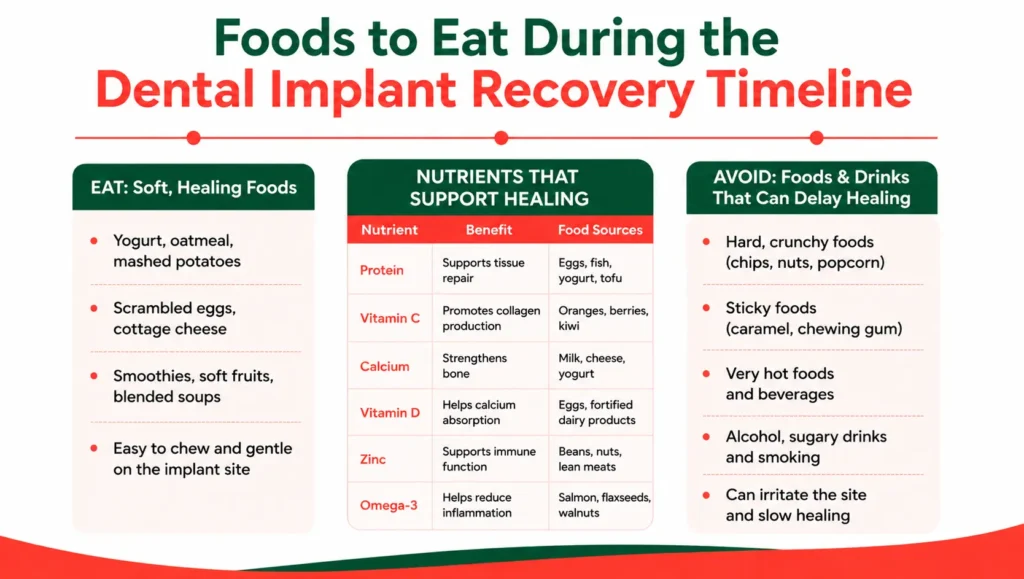
After implant surgery, your body needs adequate nutrients to repair tissues and support bone healing. Studies show that proper nutrition helps reduce recovery complications and promotes faster wound healing. During the first few days, focus on soft, easy-to-chew foods that do not place pressure on the surgical site. Protein-rich foods, fruits, vegetables, and plenty of water support healthy recovery. Avoid foods that can irritate or damage the healing area. Following a balanced diet throughout the healing process helps your body recover efficiently and supports long-term implant success.
Soft Foods Recommended After Surgery
Most dentists recommend a soft-food diet for several days after surgery to minimize irritation and support comfortable healing.Good options include yogurt, mashed potatoes, oatmeal, scrambled eggs, smoothies, cottage cheese, soft fruits, and blended soups. These foods provide energy and nutrients without requiring excessive chewing. Protein remains especially important because it helps repair tissues and supports recovery. Many patients find that eating smaller meals throughout the day improves comfort during the early healing phase. As healing progresses, you can gradually introduce firmer foods according to your dentist’s recommendations. Choosing soft, nutrient-rich meals reduces stress on the implant and encourages smoother recovery.
Nutrients That Support Faster Healing
A balanced diet helps the body heal more efficiently after surgery.
| Nutrient | Benefit for Recovery | Food Sources |
| Protein | Supports tissue repair and healing | Eggs, fish, yogurt, tofu |
| Vitamin C | Promotes collagen production | Oranges, berries, kiwi |
| Calcium | Strengthens bone formation | Milk, cheese, yogurt |
| Vitamin D | Helps calcium absorption | Eggs, fortified dairy products |
| Zinc | Supports immune function and healing | Beans, nuts, lean meats |
| Omega-3 Fatty Acids | Helps manage inflammation | Salmon, flaxseeds, walnuts |
Including these nutrients regularly can support healthier healing and stronger implant integration.
Foods and Drinks to Avoid
Hard, crunchy foods can place pressure on the implant area before it fully heals. For example, chips, nuts, popcorn, and hard candies can damage sensitive tissues or become trapped around the implant site. Sticky foods such as caramel and chewing gum may pull on healing tissues and create discomfort. Extremely hot foods and beverages can irritate the surgical area during the first few days after treatment. Alcohol and sugary drinks may also slow healing and increase inflammation. Many dentists recommend avoiding smoking because tobacco significantly increases the risk of implant failure. Choosing gentler foods during recovery helps protect the implant and supports successful healing.
Conclusion
While initial healing often occurs within a few weeks, complete osseointegration can take several months. Each stage plays an important role in ensuring the long-term success of your implant. By following your dentist’s instructions, maintaining excellent oral hygiene, eating a nutrient-rich diet, and attending regular follow-up visits, you can support a smoother recovery and improve treatment outcomes.
Ready to Restore Your Smile with Dental Implants?
Now that you understand the dental implant recovery timeline, the next step is choosing an experienced dental team you can trust. At PEACH DENTAL CARE, we use advanced implant technology and evidence-based treatment protocols to deliver predictable, long-lasting results. From your initial consultation to complete healing, our team supports you throughout every stage of your implant journey.
FAQs :
1. How long does the dental implant recovery timeline take?
typically ranges from 3–6 months for complete healing, although most patients recover from the initial surgery within 1–2 weeks.
2. What happens during the first week of the dental implant recovery timeline?
, mild swelling, tenderness, and slight bleeding are common. These symptoms usually improve within a few days.
3. Is pain normal during the dental implant recovery timeline?
Yes, mild discomfort is a normal part of Most patients find that pain decreases significantly after the first few days.
4. How can I speed up the dental implant recovery timeline?
You can support by following your dentist’s instructions, maintaining oral hygiene, eating healthy foods, and avoiding smoking.
5. What foods should I eat during the dental implant recovery timeline?
Soft, nutrient-rich foods are recommended . including yogurt, smoothies, eggs, oatmeal, and soups.
6. What foods should I avoid during the dental implant recovery timeline?
avoid hard, crunchy, sticky, and extremely hot foods that may irritate the implant site.
7. What are the signs of a successful dental implant recovery timeline?
A successful includes reduced swelling, healthy gums, stable implant placement, and minimal discomfort.
8. Can smoking affect the dental implant recovery timeline?
Yes, smoking can negatively impact by slowing healing and increasing the risk of implant failure.
9. Does bone grafting affect the dental implant recovery timeline?
Yes, bone grafting can extend because additional healing is required before the implant fully integrates with the jawbone.
10. When should I contact my dentist during the dental implant recovery timeline?
You should contact if you experience severe pain, excessive bleeding, fever, swelling that worsens, or implant movement.
11. How soon can I return to work after dental implant surgery?
Most patients can return to work within 1–3 days after the procedure, depending on the complexity of the treatment and the nature of their job. Strenuous physical activities may require a longer recovery period.
12. Can I exercise after getting a dental implant?
It is generally best to avoid intense exercise for at least 48–72 hours after surgery. Physical activity can increase blood flow and swelling, which may affect the healing process.
13. Will I need follow-up appointments after implant surgery?
Yes. Regular follow-up visits allow your dentist to monitor healing, check implant stability, and address any concerns before placing the final restoration.
14. Can dental implants fail during the healing process?
Although dental implants have a high success rate, failure can occur due to infection, poor oral hygiene, smoking, insufficient bone support, or certain medical conditions. Early detection improves treatment outcomes.
15. When can the permanent crown be placed on the implant?
The permanent crown is usually placed after the implant has fully integrated with the jawbone. For most patients, this occurs within 3–6 months, although treat