Introduction
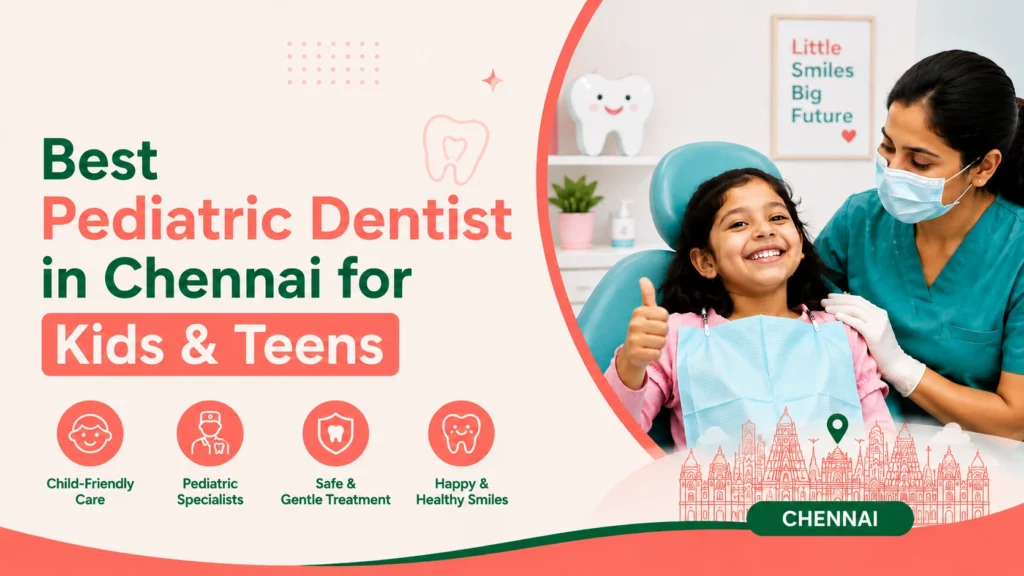
Many parents start searching for the “best pediatric dentist near me” only after their child complains about tooth pain or cavities. However, early dental care plays a major role in a child’s overall health and confidence. According to the World Health Organization, oral diseases affect nearly 3.5 billion people globally, and untreated tooth decay is one of the most common health conditions in children. Pediatric dentists specialize in treating infants, toddlers, and young children using gentle, child-friendly approaches that reduce fear and anxiety during dental visits. Early checkups also help detect cavities, bite problems, and gum issues before they become serious. From preventive treatments to comfortable dental care, choosing an experienced pediatric dentist in Chennai can help your child develop healthy oral habits and maintain a bright, confident smile for years to come.
How to Choose the Best Pediatric Dentist Near Me
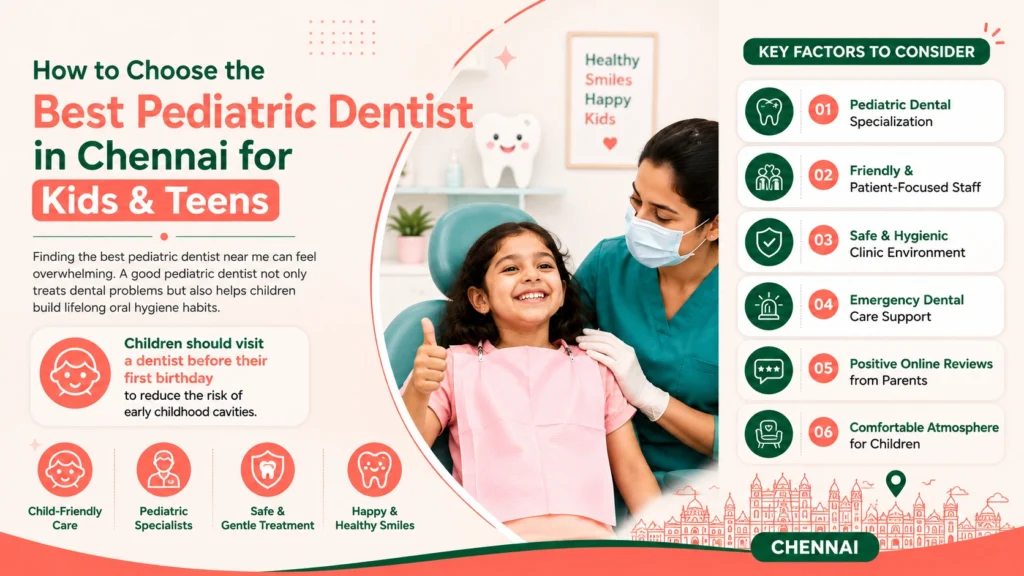
Finding the best pediatric dentist near me can feel overwhelming for many parents, especially when a child feels nervous about dental visits. A good pediatric dentist not only treats dental problems but also helps children build lifelong oral hygiene habits. According to the American Academy of Pediatric Dentistry, children should visit a dentist before their first birthday to reduce the risk of early childhood cavities. When choosing a clinic, parents should focus on experience, child-friendly care, and modern treatment methods.
Key factors to consider:
- Pediatric dental specialization
- Friendly and patient-focused staff
- Safe and hygienic clinic environment
- Emergency dental care support
- Positive online reviews from parents
- Comfortable atmosphere for children
Choosing the right pediatric dentist in Chennai can improve your child’s dental confidence and overall oral health.
Qualifications and Experience to Look For
Parents should always check a pediatric dentist’s qualifications and experience before booking an appointment. Pediatric dentists receive additional training focused on children’s oral development, behavior management, and preventive dental care. This specialized approach helps children feel calm and safe during treatment. Studies show that nearly 20% of children aged 5-11 years experience untreated cavities, making early expert care extremely important.
Important qualifications to look for:
- Specialized degree in pediatric dentistry
- Several years of clinical experience treating children
- Child-focused communication and anxiety management training
- Knowledge of preventive and emergency dental care
- Experience handling toddlers and special-needs children
- Availability for urgent dental emergencies
For example, an experienced pediatric dentist can quickly manage issues like broken teeth, sudden tooth pain, or sports-related dental injuries without increasing a child’s fear or anxiety.
Important Features of a Good Pediatric Dental Clinic
A well-designed pediatric dental clinic helps children feel relaxed and comfortable from the moment they enter. Modern clinics use advanced technology and child-friendly environments to reduce fear and improve treatment accuracy. According to research published by the National Institutes of Health, positive early dental experiences help children maintain regular dental visits later in life.
| Important Feature | Why It Matters for Children |
| Kid-friendly environment | Reduces fear and creates comfort |
| Modern dental technology | Improves painless and accurate treatments |
| Strict sterilization standards | Prevents infections and ensures safety |
| Emergency appointments | Provides quick care during dental accidents |
| Positive patient reviews | Builds trust among parents |
| Friendly and supportive staff | Helps children feel calm during treatment |
For example, colorful treatment rooms, cartoons, and gentle communication often make dental visits easier for younger children.
Questions Parents Should Ask Before Booking
Before choosing a pediatric dentist, parents should ask a few important questions to understand the clinic’s approach to children’s dental care. Clear communication helps parents feel confident and ensures children receive safe and comfortable treatment. According to the CDC, regular preventive dental visits can reduce cavity risk significantly in children.
Questions parents should ask:
- Does the clinic handle pediatric dental emergencies?
- How do you help anxious or fearful children?
- What preventive treatments do you recommend for kids?
- Do you offer fluoride treatments and dental sealants?
- How often should children visit for checkups?
- Do you provide guidance for brushing and diet habits?
For example, some pediatric clinics use distraction techniques, cartoons, or tell-show-do methods to help nervous children stay calm during treatment.
Common Pediatric Dental Treatments
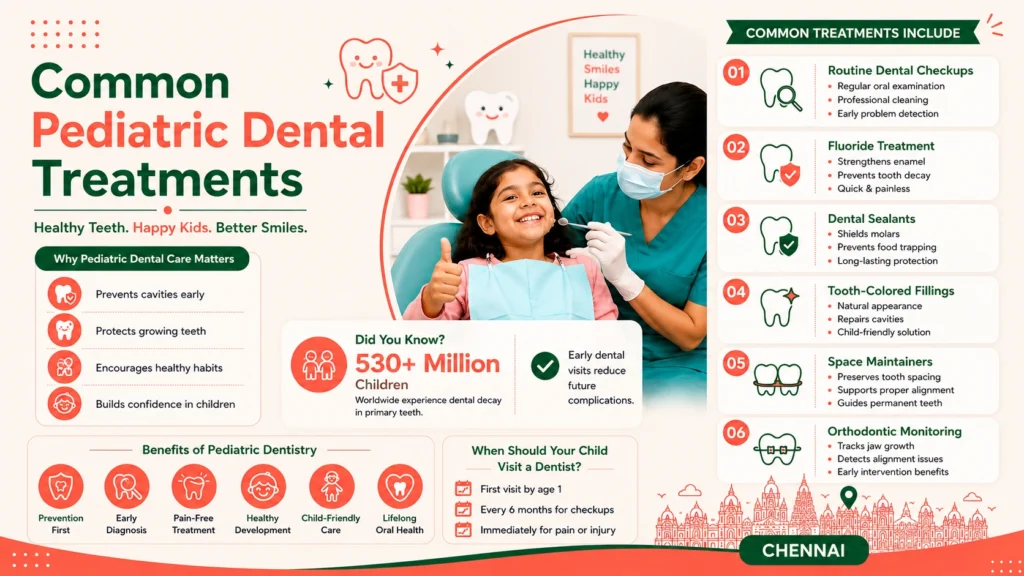
Parents often search for the best pediatric dentist near me when they notice tooth pain, cavities, or feeding issues in their child. According to the World Health Organization, nearly 530 million children suffer from untreated dental caries in primary teeth, making early treatment essential. Pediatric dentists focus on prevention, early diagnosis, and painless treatment methods designed specifically for children.
Common treatments include:
- Routine dental checkups and cleaning
- Fluoride application for cavity prevention
- Dental sealants for molar protection
- Tooth-colored cavity fillings
- Space maintainers for early tooth loss
- Early orthodontic monitoring
These treatments help children maintain healthy teeth, prevent complications, and develop strong oral hygiene habits from an early age.
Dental Checkups and Cleaning
Regular dental checkups play a key role in preventing cavities and supporting healthy oral development. Pediatric dentists examine teeth, gums, and jaw growth to catch problems early before they become serious. Professional cleaning removes plaque and tartar that brushing at home often misses, especially in back teeth. According to the American Dental Association, children who visit dentists regularly reduce cavity risk by up to 40%.
Key benefits include:
- Early detection of cavities and gum issues
- Removal of plaque and tartar buildup
- Monitoring tooth and jaw development
- Personalized brushing guidance for kids
- Fluoride advice for stronger enamel
For example, a child who skips proper cleaning may develop early decay in molars, but routine checkups can prevent it completely.
Fluoride Treatment for Kids
Fluoride treatment strengthens enamel and protects children’s teeth from decay. The Centers for Disease Control and Prevention (CDC) reports that fluoride can reduce cavities by up to 25% in children when used regularly. Pediatric dentists apply fluoride varnish in a quick, painless procedure that takes only a few minutes.
| Benefit Area | How Fluoride Helps |
| Enamel Strength | Hardens tooth surface and prevents decay |
| Cavity Prevention | Reduces acid damage from bacteria |
| Safety | Approved and safe for children in controlled doses |
| Speed | Quick application during routine visits |
For example, children who consume frequent sugary snacks or struggle with brushing benefit greatly from fluoride protection, as it creates a strong barrier against early tooth decay.
Dental Sealants
Dental sealants protect the deep grooves of molars where food particles and bacteria often get trapped. These thin protective coatings act like a shield, preventing cavities from forming in hard-to-clean areas. According to the CDC, sealants reduce the risk of molar cavities by nearly 80%, making them one of the most effective preventive treatments for children.
Why sealants matter:
- Protect back teeth from decay
- Seal deep grooves and pits in molars
- Reduce need for future fillings
- Long-lasting protection for several years
For example, a child who frequently eats sticky foods like chocolates or chips may develop cavities in molars, but sealants significantly lower that risk and help maintain strong, healthy teeth.
When Should a Child First Visit the Dentist?
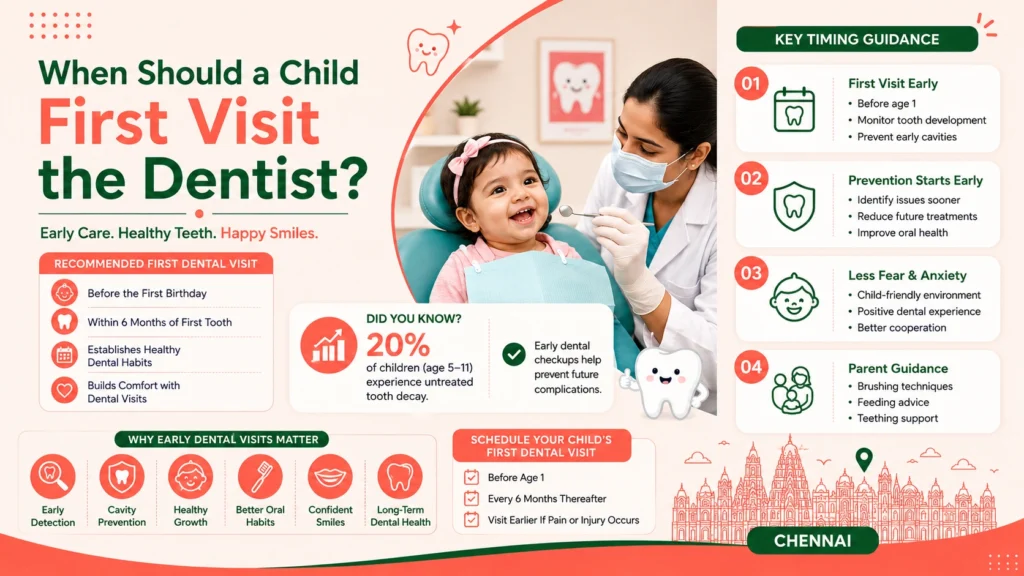
Parents often delay dental visits, thinking baby teeth do not need care, but this leads to early cavities and pain. According to the CDC, nearly 20% of children aged 5-11 years have untreated tooth decay. Early dental visits help prevent these issues and set the foundation for lifelong oral health. Pediatric dentists focus on prevention, guidance, and building comfort in young children. The right timing ensures that small problems do not turn into major dental treatments later.
Key timing guidance:
- First visit should happen early in life
- Preventive care starts before problems appear
- Early visits reduce fear and anxiety
- Helps parents understand proper oral care
Recommended Age for First Dental Visit
Experts, including the American Academy of Pediatric Dentistry, recommend a child’s first dental visit by age 1 or within 6 months after the first tooth erupts. This early step helps dentists monitor oral development and detect issues before they worsen. Many parents wait too long, but early evaluation prevents future complications.
What early visits include:
- Examination of gums and first teeth
- Guidance on brushing techniques
- Diet and feeding advice for parents
- Cavity risk assessment
- Preventive fluoride recommendations
For example, a child who visits at age 1 may avoid early bottle decay and develop healthier oral habits from the beginning.
Benefits of Early Dental Visits
Early dental visits build strong oral health habits and reduce future dental problems. According to the American Dental Association, children who start dental visits early are significantly less likely to develop severe cavities later in life.
| Benefit | Impact |
| Prevent cavities early | Stops decay before it spreads |
| Build dental confidence | Reduces fear of dentists |
| Improve hygiene habits | Encourages proper brushing routine |
| Detect alignment issues | Early orthodontic planning |
| Reduce dental anxiety | Creates positive experiences |
For example, a child who visits regularly grows up comfortable with dental care and is less likely to avoid treatment in adulthood.
Importance of Early Oral Health Monitoring
Early oral health monitoring allows pediatric dentists to track how a child’s teeth and jaw develop over time. This helps identify issues such as crowding, bite problems, or delayed tooth eruption at an early stage. According to pediatric dental studies, early monitoring reduces the need for complex orthodontic treatments later.
Key benefits of monitoring:
- Tracks jaw growth and tooth eruption patterns
- Identifies early signs of misalignment
- Prevents speech development issues
- Reduces risk of severe cavities
- Supports timely orthodontic care
For example, if a child shows early signs of overcrowding, dentists can recommend preventive orthodontic solutions before permanent teeth fully develop, saving time and treatment costs later.
Tips to Prepare Your Child for a Dental Visit
Many children feel nervous before visiting a dentist, and studies show that nearly 9%-20% of school-aged children experience dental anxiety. Parents play a major role in shaping how a child feels about oral care. A positive first experience can build lifelong dental confidence, while fear can lead to avoidance of treatment. Preparing your child early helps reduce stress and makes dental visits smoother.
Helpful tips for parents:
- Talk positively about dental visits
- Avoid words like “pain,” “injection,” or “hurt”
- Schedule morning appointments when children are fresh
- Read dental-themed storybooks together
- Practice role-playing dentist visits at home
- Reward good behavior after visits
For example, saying “the dentist will clean your teeth to make them strong” creates a positive mindset instead of fear.
How Parents Can Reduce Dental Anxiety
Parents strongly influence how children perceive dental care. Research shows that children with positive parental guidance are 60% more likely to attend regular dental checkups without fear. Using calm, encouraging language helps reduce anxiety before the visit even begins. Parents should avoid negative words and instead describe the dentist as a “tooth helper” or “smile doctor.”
Ways to reduce dental anxiety:
- Use positive phrases like “clean teeth check”
- Avoid scary or negative dental words
- Explain visits in simple, friendly language
- Role-play dentist visits using toys or mirrors
- Stay calm to help the child feel safe
- Reward cooperation with praise or small treats
For example, pretending to “count teddy bear’s teeth” at home can help children understand the process in a fun and non-threatening way.
What Happens During a Pediatric Dental Appointment
A pediatric dental appointment follows a structured and child-friendly process designed to keep children relaxed and cooperative. According to pediatric dental surveys, over 70% of children respond better when dentists explain each step before performing it. The visit usually includes a gentle examination, cleaning if needed, and preventive advice for parents.
| Step | What Happens | Child Experience |
| Welcome | Friendly greeting and comfort building | Child feels safe |
| Examination | Teeth and gum check | Gentle and painless |
| Cleaning | Removal of plaque if required | Quick and mild sensation |
| Guidance | Oral care advice for parents | Educational support |
For example, dentists may use “tell-show-do” techniques, where they explain and demonstrate tools before using them, helping children feel more in control and less afraid.
Creating a Positive Dental Experience at Home
Building a positive attitude toward dental care at home helps reduce fear before the actual visit. Studies show that children who follow structured brushing routines with parents are 50% more likely to maintain better oral hygiene and feel less anxious during dental visits. Simple daily habits and playful learning can make a big difference.
Ways to create positive experiences:
- Read dental storybooks together
- Watch kid-friendly dental videos
- Practice brushing with songs or timers
- Use mirror games to show teeth cleaning
- Pretend play as dentist and patient
- Praise and reward good brushing habits
For example, turning brushing time into a “2-minute tooth adventure” with music helps children enjoy oral care instead of resisting it. Over time, these habits build confidence and reduce fear of real dental visits.
Conclusion
Early dental care plays a vital role in shaping your child’s long-term oral health, confidence, and overall well-being. Studies show that children who visit a dentist early are significantly less likely to develop severe cavities and dental anxiety later in life. Regular checkups help detect problems at an early stage, prevent pain, and ensure proper growth of teeth and jaws. By building healthy oral habits from childhood, parents can protect their child’s smile for years to come.
Don’t wait for tooth pain or dental issues to appear-start your child’s oral health journey early with regular dental visits and preventive care. At Peach Dental Clinic, Chennai, our expert pediatric dental team provides gentle, child-friendly care designed to keep young smiles healthy and stress-free.
Frequently Asked Questions
1. At What Age Should My Child First Visit a Dentist?
Experts, including the American Academy of Pediatric Dentistry, recommend a child’s first dental visit by age 1 or within 6 months after the first tooth erupts. Early visits help detect cavities, monitor growth, and build comfort with dental care from the beginning.
2. How Often Should Kids Visit a Pediatric Dentist?
Children should visit a pediatric dentist every 6 months for routine checkups. Regular visits help prevent cavities, monitor tooth development, and maintain healthy oral hygiene habits.
3. Are Baby Teeth Really Important?
Yes, baby teeth are very important because they help with chewing, speech development, and guiding permanent teeth into the correct position. Early loss of baby teeth can lead to alignment issues.
4. How Can I Prevent Cavities in My Child?
Prevent cavities by encouraging twice-daily brushing, limiting sugary snacks, using fluoride toothpaste, and scheduling regular dental checkups. Dental sealants also provide strong protection.
5. What Foods Cause Tooth Decay in Kids?
Sticky and sugary foods like candies, chocolates, chips, and sweetened drinks increase cavity risk. Frequent snacking without brushing can speed up tooth decay.
6. Is Fluoride Safe for Children?
Yes, fluoride is safe when used in recommended amounts. It strengthens enamel and reduces cavities significantly. Pediatric dentists carefully control fluoride dosage based on age.
7. How Do Pediatric Dentists Handle Nervous Children?
Pediatric dentists use child-friendly techniques like “tell-show-do,” storytelling, toys, and positive reinforcement. These methods help reduce fear and make visits comfortable.
8. Can Thumb Sucking Affect Teeth Alignment?
Yes, prolonged thumb sucking can affect jaw growth and cause teeth misalignment. Early guidance and behavioral correction help prevent long-term dental issues.
9. What Is the Cost of Pediatric Dental Treatment?
Costs vary based on treatment type, but preventive care like checkups is affordable compared to restorative procedures. Early treatment also helps avoid expensive dental problems later.
10. How Do I Find the Best Pediatric Dentist Near Me?
Look for experienced pediatric dentists, child-friendly clinics, positive reviews, emergency care availability, and modern equipment. Choosing a trusted clinic ensures safe and comfortable care for your child.