INTRODUCTION
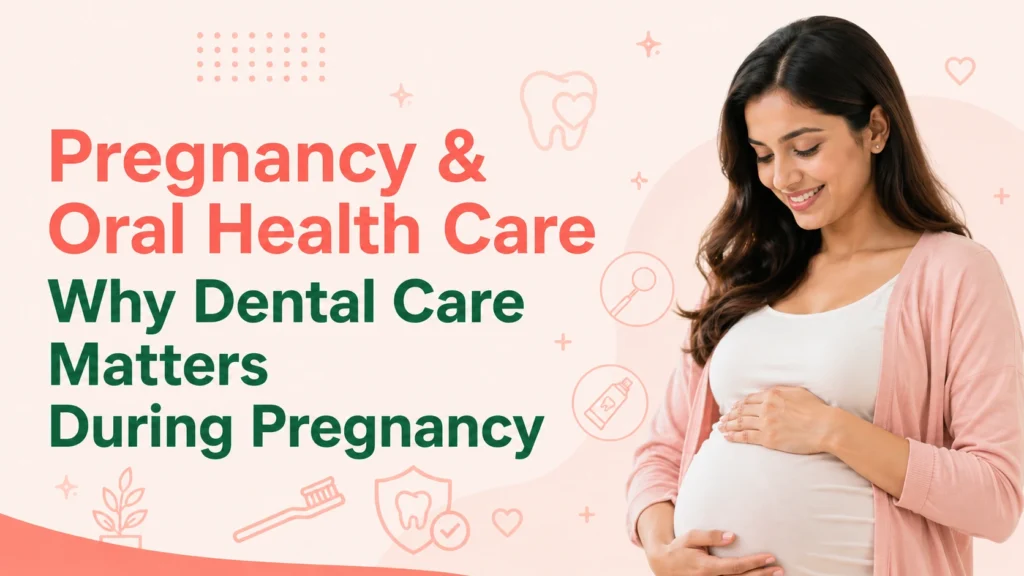
Pregnancy & oral health care brings many changes to the body, and oral health often becomes one of the most overlooked areas during this important phase. Many pregnant women experience swollen gums, bleeding while brushing, tooth sensitivity, bad breath, or enamel erosion caused by morning sickness. Hormonal changes during pregnancy can increase the risk of gum disease and cavities, making proper dental care more important than ever. Proper pregnancy oral health care helps reduce these risks and supports healthier teeth and gums throughout pregnancy.
Unfortunately, many women avoid dental visits because of common myths about dental treatment during pregnancy. Pregnancy & oral health care Ignoring oral health problems, however, can affect both maternal comfort and overall wellness. The good news is that safe and preventive dental care can help protect your teeth and gums throughout pregnancy. From maintaining daily oral hygiene to understanding which dental treatments are safe, proper guidance can make a significant difference. In this guide, explore essential pregnancy oral health care tips, common dental problems, safe treatments, and ways to maintain a healthy smile during pregnancy.
How Pregnancy Affects Oral Health
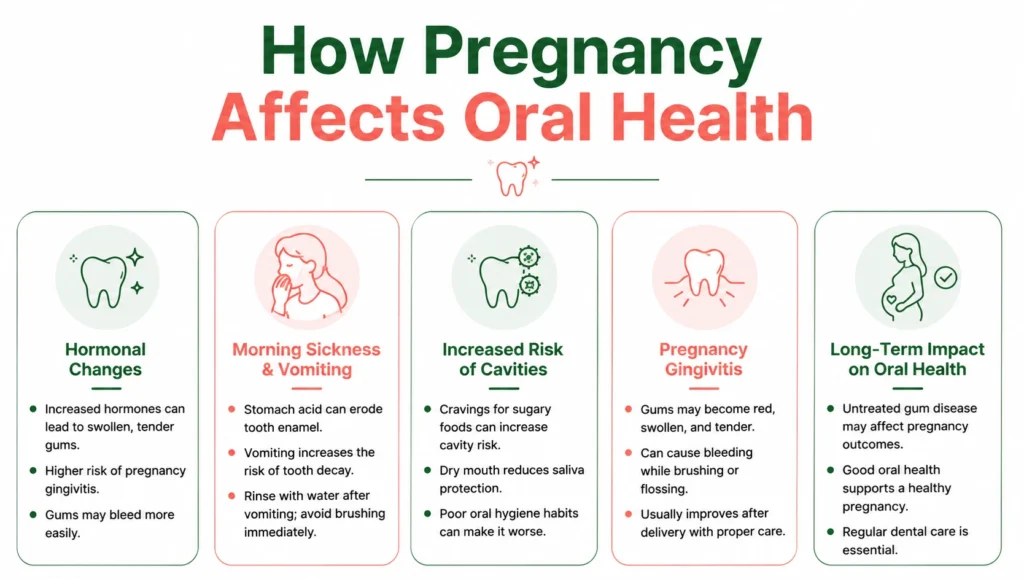
Pregnancy causes several hormonal and physical changes that can directly affect oral health. Increased levels of estrogen and progesterone make gums more sensitive to plaque and bacteria, which often leads to swelling, bleeding, and inflammation. Many pregnant women also experience changes in eating habits, frequent snacking, dry mouth, and morning sickness, all of which can increase the risk of cavities and gum disease.
Studies show that a large percentage of pregnant women develop pregnancy gingivitis, especially during the second trimester. Common symptoms include red gums, bleeding while brushing, tooth sensitivity, and bad breath. Morning sickness can also expose teeth to stomach acids, gradually weakening tooth enamel. Understanding pregnancy oral health care can help women identify dental issues early and seek timely treatment.
Hormonal Changes and Gum Health
Hormonal fluctuations during pregnancy can significantly affect gum health. Increased estrogen and progesterone levels improve blood flow to the gums, making them more sensitive to plaque and bacteria. As a result, many pregnant women notice gum swelling, tenderness, redness, and bleeding while brushing or flossing.
Pregnancy hormones also increase the body’s inflammatory response, which allows plaque to irritate the gums more easily. Pregnancy & oral health care
Studies show that pregnancy gingivitis affects a large number of pregnant women, especially during the second trimester. Regular pregnancy oral health care practices can help control gum inflammation and bleeding.
Common gum-related symptoms during pregnancy include:
- Swollen gums
- Bleeding while brushing
- Gum tenderness
- Red or inflamed gums
- Bad breath
- Increased gum sensitivity
Why Pregnant Women Face Higher Risk of Gum Disease
Pregnant women face a higher risk of gum disease because hormonal changes increase gum sensitivity and plaque accumulation. CDC facts on pregnancy and oral health Changes in eating habits, morning sickness, and frequent snacking can also create a favorable environment for bacterial growth inside the mouth.
Pregnancy & oral health care stays on teeth for long periods, gums become inflamed and irritated. Without proper care, mild gingivitis can progress into more severe gum disease.
| Pregnancy Factor | Effect on Oral Health | Increased Risk |
| Hormonal Changes | Gum inflammation and sensitivity | Gingivitis |
| Frequent Snacking | More sugar exposure | Cavities and plaque buildup |
| Morning Sickness | Acid exposure on teeth | Enamel erosion |
| Fatigue During Pregnancy | Irregular oral care routine | Poor gum health |
| Dry Mouth | Reduced saliva protection | Bacterial growth |
Morning Sickness and Tooth Enamel Damage
Morning sickness affects many pregnant women, especially during the first trimester. Frequent vomiting exposes teeth to strong stomach acids that gradually weaken tooth enamel. Enamel acts as the protective outer layer of teeth, and repeated acid exposure can increase sensitivity, discoloration, and cavity risk.
Pregnancy & oral health care Many women brush immediately after vomiting, but this habit can spread acid across softened enamel and increase damage. Dentists usually recommend rinsing the mouth with water first and waiting at least 30 minutes before brushing.
For example, a pregnant woman experiencing daily morning sickness may notice sharp sensitivity while drinking cold water or eating citrus fruits because enamel becomes thinner over time.
Pregnancy cravings for acidic foods and sugary snacks can further increase enamel wear. Staying Pregnancy & oral health care hydrated and maintaining proper oral hygiene helps reduce these effects. Pregnancy oral health care becomes especially important when morning sickness occurs frequently.
Dentists often suggest:
- Rinsing with plain water after vomiting
- Using fluoride toothpaste
- Eating calcium-rich foods
- Avoiding frequent acidic beverages
Preventive dental care during Pregnancy & oral health care can help protect enamel and reduce long-term oral health complications caused by morning sickness.
Common Oral Health Problems During Pregnancy
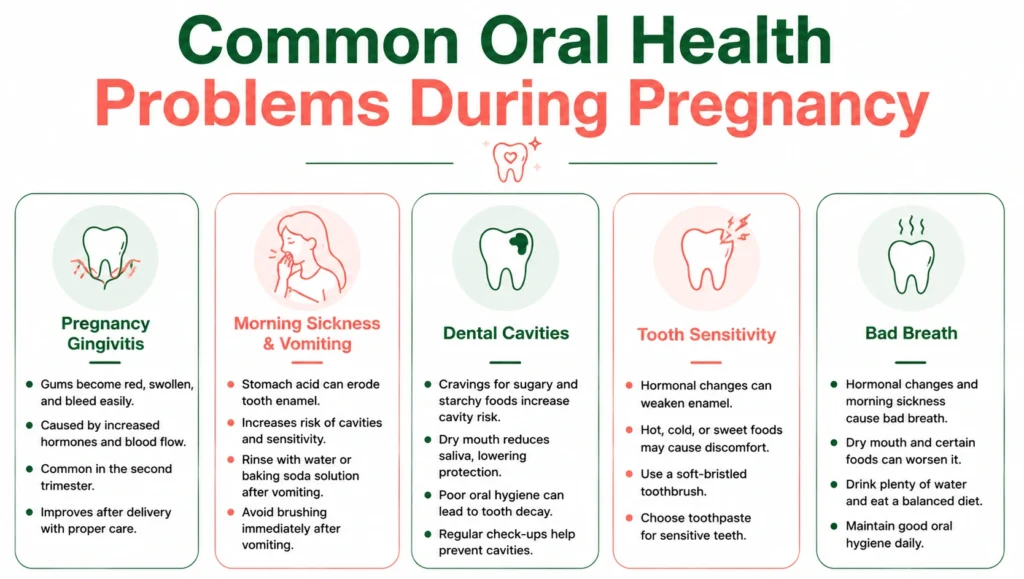
Pregnancy & oral health care can increase the risk of several oral health problems because hormonal changes affect the gums, teeth, and overall oral environment. Many pregnant women experience symptoms such as swollen gums, tooth sensitivity, bleeding while brushing, and increased plaque buildup. Changes in diet, frequent snacking, and morning sickness can also contribute to dental problems during pregnancy.
Research shows that pregnancy gingivitis affects a large percentage of pregnant women, especially during the second trimester. Some women may also notice tooth sensitivity caused by enamel erosion from morning sickness or gum recession due to inflammation.
Pregnancy Gingivitis
Pregnancy gingivitis is one of the most common oral health problems during pregnancy. Hormonal changes increase blood flow to the gums and make gum tissue more sensitive to plaque and bacteria. As a result, many pregnant women notice swelling, redness, tenderness, and bleeding gums, especially during the second trimester.
Studies show that a significant number of pregnant women experience some form of gum inflammation during pregnancy. Poor oral hygiene can worsen the condition and increase the risk of more serious gum disease later. Consistent pregnancy oral health care can reduce the severity of pregnancy gingivitis symptoms.
Common symptoms of pregnancy gingivitis include:
- Swollen gums
- Bleeding while brushing or flossing
- Red or tender gums
- Bad breath
- Gum sensitivity
- Mild discomfort while eating
Tooth Sensitivity
Tooth sensitivity becomes more common during pregnancy because hormonal changes, enamel erosion, and gum inflammation can expose sensitive areas of the teeth. Many pregnant women experience discomfort while eating hot, cold, sweet, or acidic foods.
Morning sickness also plays a major role in enamel wear because stomach acids weaken the outer protective layer of teeth. Increased sensitivity can make daily eating and drinking uncomfortable if ignored. Good pregnancy oral health care habits help protect enamel and reduce tooth sensitivity.
| Cause of Sensitivity | Effect on Teeth | Common Symptoms |
| Morning Sickness | Enamel erosion | Sharp pain with cold foods |
| Gum Inflammation | Gum recession | Sensitivity near gum line |
| Frequent Snacking | Increased acid exposure | Tooth discomfort |
| Poor Oral Hygiene | Plaque buildup | Pain while brushing |
Pregnancy Tumors on Gums
Pregnancy tumors on gums, also called pyogenic granulomas, are non-cancerous growths that sometimes develop because of hormonal changes and increased gum inflammation during pregnancy. These small red lumps usually appear on the gums during the second trimester and often develop near areas with plaque buildup or irritation.
Although the name sounds alarming, these growths are generally harmless and temporary. They may bleed easily during brushing or eating because they contain many blood vessels.
Common characteristics of pregnancy tumors include:
- Small red or pink gum lumps
- Bleeding while brushing
- Tenderness near the affected area
- Swelling around the gums
- Growth near plaque accumulation
For example, a pregnant woman with untreated gingivitis may develop a soft gum swelling between two teeth where plaque accumulates frequently.
Poor oral hygiene can increase the likelihood of these growths becoming larger or more uncomfortable. Dentists usually focus on plaque control and gum care to manage the condition.
In many cases, pregnancy tumors shrink naturally after childbirth. However, dentists may recommend removal if the growth interferes with eating, brushing, or causes repeated bleeding. Maintaining regular oral hygiene and professional cleanings can help reduce gum irritation and lower the risk of developing these temporary growths during pregnancy.
Why Oral Health During Pregnancy Matters
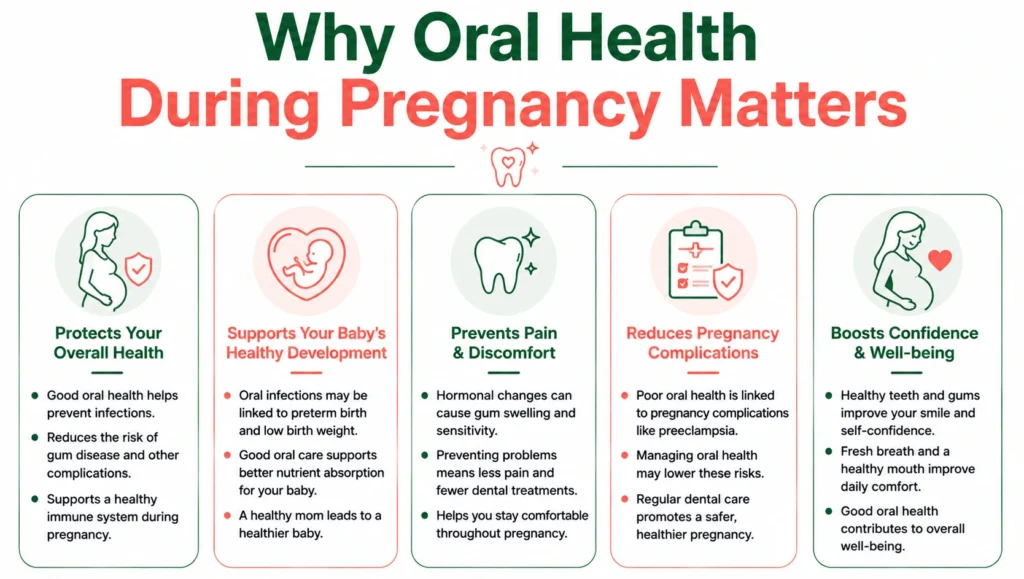
Pregnancy & oral health care plays an important role in maintaining overall health during pregnancy. Hormonal changes can increase the risk of gum inflammation, plaque buildup, tooth sensitivity, and cavities, making preventive dental care essential throughout pregnancy. Many women focus mainly on prenatal nutrition and regular medical checkups but often overlook dental care, even though healthy teeth and gums contribute to better comfort and well-being.
Research shows that untreated gum problems during Pregnancy & oral health care can lead to increased oral discomfort and difficulty maintaining proper nutrition. Swollen or bleeding gums may make eating painful, while tooth sensitivity can interfere with daily eating habits.
Connection Between Gum Health and Overall Health
Healthy gums support overall oral and physical well-being during pregnancy. When plaque and bacteria build up around the gums, inflammation can spread quickly and affect comfort, eating habits, and daily oral hygiene. Pregnancy & oral health care hormones increase gum sensitivity, making proper gum care even more important.
Pregnancy & oral health care Gum health directly affects many aspects of oral wellness, including chewing, speech, and protection against infections. Dentists often encourage pregnant women to monitor gum changes closely because early care can prevent more serious dental problems later.
Healthy gums provide several benefits, including:
- Reduced plaque buildup
- Fresher breath
- Better chewing comfort
- Lower risk of gum infections
- Easier brushing and flossing
- Improved oral hygiene maintenance
Impact of Untreated Gum Disease During Pregnancy
Untreated gum disease during Pregnancy & oral health care can create several oral health complications that affect daily comfort and long-term dental health. Pregnancy hormones already make gums more sensitive to plaque, and poor oral hygiene can worsen inflammation quickly. Without treatment, mild gingivitis may progress into advanced periodontal problems.
| Gum Disease Problem | Effect on Oral Health | Common Symptoms |
| Gingivitis | Gum inflammation | Bleeding while brushing |
| Plaque Buildup | Increased bacterial growth | Bad breath |
| Swollen Gums | Difficulty eating comfortably | Gum tenderness |
| Periodontal Infection | Damage to gum tissue | Persistent gum pain |
Importance of Preventive Dental Care
Preventive dental care helps pregnant women avoid many common oral health problems before they become serious. Regular dental checkups, professional cleanings, and proper oral hygiene routines reduce the risk of gum disease, cavities, enamel erosion, and plaque buildup during pregnancy.
Hormonal changes can make gums more sensitive and vulnerable to inflammation, so preventive care becomes especially important throughout every trimester. schedule a dental checkup at Peach Dental Clinic Pregnancy & oral health care Dentists can identify early signs of dental problems and recommend safe treatment options before symptoms worsen. ADA’s tips for protecting teeth while pregnant
Important preventive dental care habits include:
- Brushing twice daily
- Flossing regularly
- Using fluoride toothpaste
- Drinking enough water
- Limiting sugary snacks
- Scheduling routine dental visits
For example, a pregnant woman experiencing mild gum bleeding may prevent severe gingivitis simply through professional cleaning and improved brushing habits.
Conclusion:
Pregnancy & oral health care can significantly affect oral health, making proper dental care an essential part of prenatal wellness. Hormonal changes, morning sickness, gum inflammation, and increased sensitivity can all raise the risk of dental problems if ignored. Maintaining healthy teeth and gums during pregnancy not only improves daily comfort but also supports better overall well-being.
Simple habits such as regular brushing, flossing, healthy eating, and routine dental checkups can help prevent many common pregnancy-related oral health issues. Safe and preventive dental care allows dentists to identify problems early and provide suitable treatment when needed.
If you notice symptoms like bleeding gums, tooth sensitivity, or persistent oral discomfort during pregnancy, consulting an experienced dentist can help protect your smile throughout every stage of pregnancy. visit Peach Dental Clinic Healthy oral care habits today can support stronger teeth, healthier gums, and a more comfortable pregnancy journey.
FAQs:
1. Is dental treatment safe during pregnancy?
Yes. Most routine dental treatments and cleanings are safe during pregnancy, especially during the second trimester.
2. Why do gums bleed more during pregnancy?
Hormonal changes increase gum sensitivity and inflammation, making gums more likely to bleed while brushing or flossing.
3. Can pregnancy cause tooth sensitivity?
Yes. Morning sickness, enamel erosion, and gum changes can increase tooth sensitivity during pregnancy.
4. How often should pregnant women visit the dentist?
Pregnant women should continue regular dental checkups and visit the dentist if they notice pain, swelling, or bleeding gums.
5. What is pregnancy gingivitis?
Pregnancy gingivitis is gum inflammation caused by hormonal changes and plaque buildup during pregnancy.
6. Can morning sickness damage teeth?
Yes. Frequent vomiting exposes teeth to stomach acids, which can weaken enamel and increase sensitivity.
7. Are dental X-rays safe during pregnancy?
Dentists may perform dental X-rays during pregnancy only when necessary and with proper safety precautions.
8. What foods help maintain Pregnancy & oral health care ?
Calcium-rich foods, fresh fruits, vegetables, dairy products, and plenty of water help support healthy teeth and gums.
9. Can pregnant women get professional teeth cleaning?
Yes. Professional dental cleaning is safe and helps reduce plaque buildup and gum inflammation during pregnancy.
10. How can I protect my teeth during pregnancy?
Brush twice daily, floss regularly, rinse after morning sickness, reduce sugary snacks, and schedule routine dental checkups to maintain good oral health during pregnancy.