
Introduction
Bad breath, also known as halitosis, can affect your confidence, relationships, and overall oral health. If you’re searching for how to get rid of bad breath permanently, the first step is understanding its underlying cause rather than simply masking the odor with mints or mouthwash. According to the World Health Organization (WHO), oral diseases affect nearly 3.5 billion people worldwide, while studies published in the Journal of Natural Science, Biology and Medicine estimate that 15–30% of the global population experiences chronic bad breath. The good news is that proper oral care, healthy lifestyle habits, and timely dental treatment can provide lasting results. This guide explains practical, evidence-based ways to eliminate bad breath permanently and maintain fresh breath every day.
Choosing the Right Mouthwash
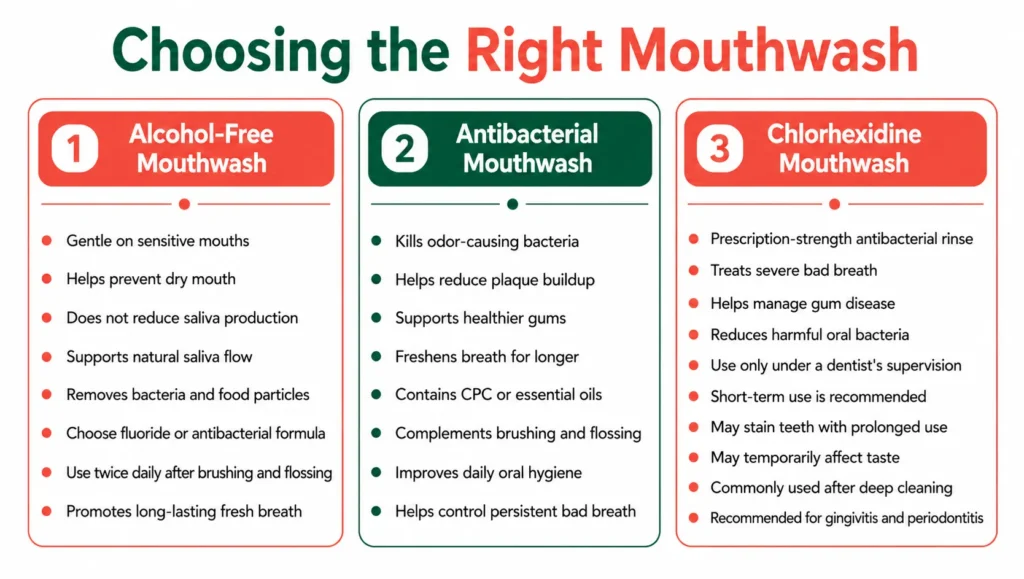
Choosing the right mouthwash plays an important role if you want to learn how to get rid of bad breath permanently. While brushing and flossing remove plaque and food particles, a quality mouthwash helps reduce odor-causing bacteria in areas that your toothbrush cannot easily reach. According to the American Dental Association (ADA), antimicrobial mouthwashes can support daily oral hygiene when used alongside regular brushing and flossing. However, not every mouthwash offers the same benefits. Some products simply mask bad breath for a short time, while others actively reduce harmful bacteria and improve oral health. Selecting the right formula based on your oral condition can help you maintain fresher breath and healthier gums over the long term if you want to know how to get rid of
Alcohol-Free Mouthwash
Alcohol-free mouthwash offers an excellent choice for people with sensitive mouths or dry mouth (xerostomia). The National Institute of Dental and Craniofacial Research (NIDCR) explains that saliva plays an important role in maintaining oral health and protecting the mouth from bacteria. Unlike alcohol-based products, it cleans the mouth without causing irritation or reducing saliva production. Saliva naturally washes away food particles and bacteria, making it essential for fresh breath. If your goal is how to get rid of bad breath permanently, choose an alcohol-free mouthwash containing fluoride or antibacterial ingredients. Use it twice daily after brushing and flossing to reduce bacteria, protect your teeth, and maintain a healthier oral environment without causing unnecessary dryness.
Antibacterial Mouthwash
Antibacterial mouthwash targets the bacteria responsible for producing unpleasant mouth odors. It works best when combined with proper brushing, flossing, and tongue cleaning instead of replacing them. If you want to know how to get rid of bad breath permanently, an antibacterial rinse can become an effective part of your daily routine. Studies published in the Journal of Clinical Dentistry report that antibacterial mouthwashes containing essential oils or cetylpyridinium chloride (CPC) significantly reduce plaque and oral bacteria.
Benefits of antibacterial mouthwash include:
- Reduces odor-causing bacteria
- Helps control plaque buildup
- Supports healthier gums
- Freshens breath for longer
- Complements your daily oral hygiene routine
Chlorhexidine Mouthwash
If you want to know how to get rid of bad breath permanently, chlorhexidine mouthwash is a prescription-strength antibacterial rinse that dentists often recommend for treating gum disease and severe bad breath. It effectively reduces harmful bacteria that contribute to chronic halitosis. If routine oral hygiene has not solved your problem, your dentist may prescribe chlorhexidine as part of a treatment plan for how to get rid of bad breath permanently. However, you should use it only for the recommended duration because prolonged use may stain teeth or temporarily affect taste.
Examples of when dentists may recommend chlorhexidine mouthwash include:
- After deep teeth cleaning (scaling and root planing)
- During treatment for gingivitis or periodontitis
- Following certain dental procedures
- For managing persistent bacterial bad breath under professional supervision
Common Mistakes That Keep Bad Breath Coming Back
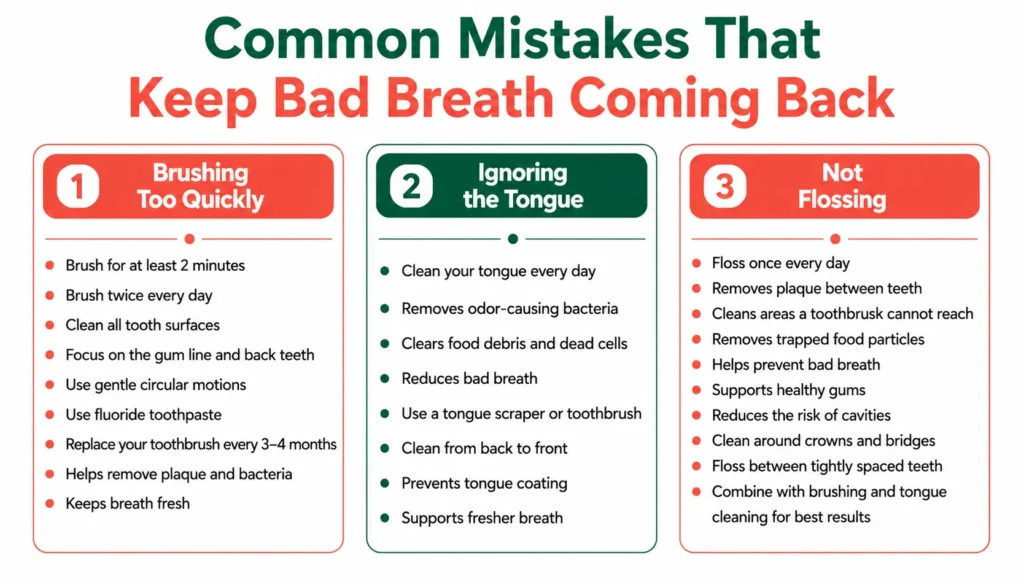
Many people try different products to freshen their breath but continue making everyday mistakes that allow odor-causing bacteria to thrive. If you want to learn how to get rid of bad breath permanently, you must correct these habits instead of simply covering the smell. According to the American Dental Association (ADA), brushing, flossing, tongue cleaning, and regular dental checkups work together to maintain good oral health. Skipping even one step can lead to plaque buildup, gum disease, and persistent bad breath. Understanding these common mistakes helps you improve your oral care routine and enjoy fresher breath for the long term.
Brushing Too Quickly
Brushing your teeth for only a few seconds leaves behind plaque, food particles, and bacteria that produce unpleasant odors. The American Dental Association recommends brushing for two full minutes twice each day to clean every tooth surface effectively. When you rush, you often miss the gum line and back teeth, where bacteria easily collect. If your goal is how to get rid of bad breath permanently, focus on brushing slowly with gentle circular motions and fluoride toothpaste. Replace your toothbrush every three to four months because worn bristles remove less plaque. A complete brushing routine improves oral hygiene and helps keep your breath fresh throughout the day.
Ignoring the Tongue
Your tongue contains tiny grooves that trap bacteria, food debris, and dead cells. These bacteria release volatile sulfur compounds, one of the leading causes of bad breath. Studies suggest that tongue coating contributes to most cases of intraoral halitosis. If you are searching for how to get rid of bad breath permanently, clean your tongue every day using a tongue scraper or a toothbrush.
| Habit | Effect on Breath |
| Cleaning the tongue daily | Removes odor-causing bacteria and food debris |
| Skipping tongue cleaning | Increases bacterial buildup and unpleasant odor |
| Using a tongue scraper | Cleans more effectively than brushing alone for many people |
| Cleaning from back to front | Removes coating and supports fresher breath |
Not Flossing
Your toothbrush cannot clean the tight spaces between teeth where food particles and plaque collect. Without daily flossing, bacteria continue to grow and create unpleasant odors. The American Dental Association recommends flossing once every day to reduce plaque and support healthy gums. If you want to know how to get rid of bad breath permanently, make flossing part of your daily routine instead of treating it as an optional step.
Examples of areas where floss removes hidden debris include:
- Between molars after eating meat or vegetables
- Around dental crowns and bridges
- Near the gum line where plaque accumulates
- Between tightly spaced front teeth
Daily flossing, combined with brushing and tongue cleaning, helps reduce bad breath and lowers the risk of cavities and gum disease.
Struggling with persistent bad breath? Book an appointment at Peach Dental Clinic for a professional evaluation and personalized treatment to restore fresh breath and a healthy smile.
Myths and Facts About Bad Breath
Many people believe common myths about bad breath, which often delay proper treatment. If you are searching for how to get rid of bad breath permanently, understanding the facts helps you choose effective solutions instead of temporary fixes. According to the American Dental Association (ADA), most cases of bad breath begin inside the mouth because of bacteria, plaque, tongue coating, or gum disease—not because of the stomach. Products like chewing gum or mouthwash may provide short-term freshness, but they do not eliminate the underlying cause. Knowing the difference between myths and facts allows you to build better oral care habits and enjoy fresher breath for the long term.
Mouthwash Alone Can Cure Bad Breath
Many people think mouthwash can permanently eliminate bad breath, but this belief is a myth. Most cosmetic mouthwashes only mask unpleasant odors for a short time without removing the bacteria responsible for halitosis. If you want to know how to get rid of bad breath permanently, use mouthwash along with a complete oral care routine.The American Dental Association explains that mouthwash works best as part of a complete oral hygiene routine that includes brushing, flossing, and tongue cleaning. If your goal is how to get rid of bad breath permanently, choose an antibacterial or alcohol-free mouthwash and combine it with daily oral care. If you want to know how to get rid of bad breath permanently, regular dental checkups also help identify problems such as gum disease or cavities that mouthwash alone cannot treat. A complete routine delivers better long-term results than relying on mouthwash alone.
Bad Breath Always Comes From the Stomach
Many people assume the stomach causes bad breath, but dental experts say this is rarely true. Research shows that about 80–90% of bad breath cases originate in the mouth, mainly because of bacteria on the tongue, gum disease, or poor oral hygiene. If you want to know how to get rid of bad breath permanently, focus on improving your oral care routine before assuming a digestive problem.
Common causes of bad breath include:
- Plaque and bacteria on the teeth
- Tongue coating
- Gum disease
- Tooth decay
- Dry mouth
- Food trapped between teeth
Although conditions such as acid reflux or digestive disorders can contribute to bad breath, they account for a much smaller number of cases. A dentist can help identify the actual cause and recommend the right treatment.
Chewing Gum Solves the Problem
Chewing gum can temporarily freshen your breath, but it does not remove plaque, bacteria, or gum disease. Sugar-free gum increases saliva production, which helps rinse away food particles and reduces dry mouth. However, its effect lasts only while you chew. If your goal is how to get rid of bad breath permanently, use chewing gum as a temporary aid rather than a treatment. You still need to brush twice daily, floss every day, clean your tongue, and visit your dentist regularly.
Examples:
- Chewing sugar-free xylitol gum after lunch helps increase saliva until you can brush your teeth.
- Using mint-flavored gum before a meeting masks odor temporarily but does not remove the bacteria causing bad breath.
- Drinking water and brushing after coffee provides longer-lasting freshness than chewing gum alone.
Benefits of Treating Bad Breath Permanently
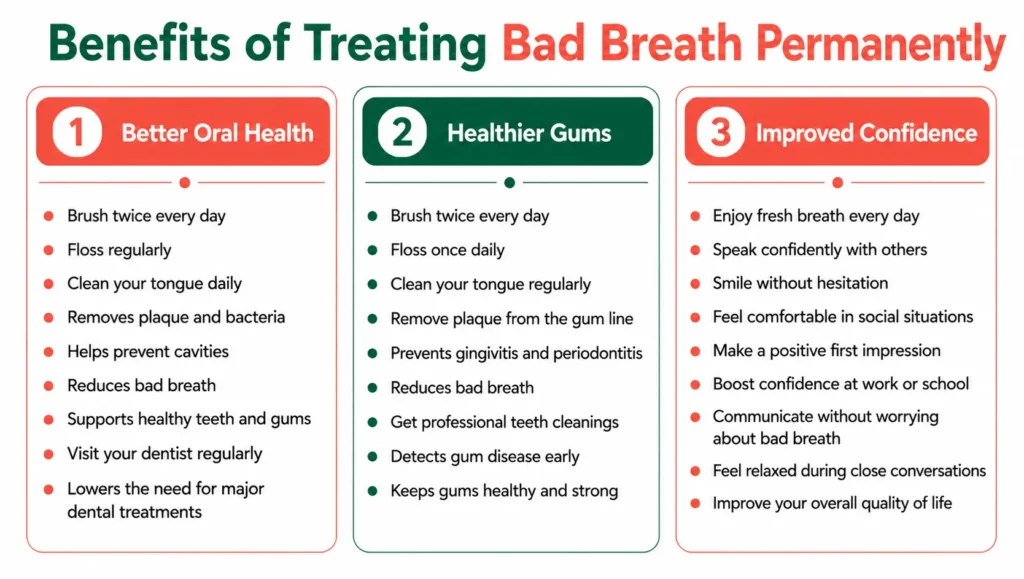
Treating bad breath permanently offers more than fresh breath—it improves your overall oral health and quality of life. If you are looking for how to get rid of bad breath permanently, focusing on the root cause helps prevent recurring problems instead of masking unpleasant odors. According to the World Health Organization (WHO), oral diseases affect nearly 3.5 billion people worldwide, making preventive oral care essential. A consistent routine that includes brushing, flossing, tongue cleaning, and regular dental visits reduces harmful bacteria and protects your teeth and gums. By treating bad breath early, you can enjoy healthier oral tissues, greater confidence, and a lower risk of future dental complications.
Better Oral Health
If you want to know how to get rid of bad breath permanently, eliminating bad breath often means improving your overall oral hygiene. When you brush twice daily, floss regularly, and clean your tongue, you remove plaque and bacteria that contribute to cavities, gum disease, and unpleasant odors. The American Dental Association recommends combining these habits with routine dental checkups to maintain long-term oral health. If your goal is how to get rid of bad breath permanently, treating the underlying cause benefits your entire mouth rather than simply hiding the smell.Better oral health also reduces the need for complex dental treatments in the future. If you want to know how to get rid of bad breath permanently, healthy teeth and gums make eating, speaking, and smiling more comfortable while supporting lasting fresh breath.
Healthier Gums
If you want to know how to get rid of bad breath permanently, healthy gums form the foundation of a healthy smile. When plaque builds up along the gum line, bacteria trigger inflammation that can lead to gingivitis and periodontitis—two common causes of persistent bad breath. Following a complete oral care routine helps protect your gums and supports how to get rid of bad breath permanently. Regular professional cleanings also remove hardened tartar that brushing cannot eliminate.
| Healthy Habit | Benefit for Gums |
| Brushing twice daily | Removes plaque before it irritates the gums |
| Flossing every day | Cleans between teeth and prevents gum inflammation |
| Tongue cleaning | Reduces harmful bacteria that contribute to bad breath |
| Regular dental checkups | Detects gum disease early and prevents complications |
| Professional teeth cleaning | Removes tartar and supports healthy gum tissue |
Improved Confidence
If you want to know how to get rid of bad breath permanently, fresh breath helps you feel more confident in everyday situations. Persistent bad breath often causes people to avoid conversations, smile less, or feel uncomfortable during social and professional interactions. If you follow the right oral care routine for how to get rid of bad breath permanently, you can enjoy greater self-confidence and communicate without worrying about unpleasant breath. Good oral hygiene not only improves your health but also creates a positive impression.
Examples of how fresh breath improves confidence:
- Speaking confidently during job interviews or business meetings.
- Enjoying conversations with friends and family without feeling self-conscious.
- Smiling comfortably in social gatherings and photographs.
- Meeting clients or customers with greater confidence in professional settings.
- Participating in close conversations without worrying about mouth odor.
Conclusion
Learning how to get rid of bad breath permanently starts with understanding its root cause and following a consistent oral care routine. Brushing twice a day, flossing daily, cleaning your tongue, staying hydrated, choosing the right mouthwash, and visiting your dentist regularly all work together to eliminate odor-causing bacteria and support long-term oral health. While temporary solutions may mask bad breath, only proper oral hygiene and professional dental care provide lasting results. By making these habits part of your daily routine, you can enjoy fresher breath, healthier gums, and greater confidence in every interaction. If you want to know how to get rid of bad breath permanently, following a consistent oral care routine is the most effective long-term solution. If persistent bad breath continues despite good oral care, don’t ignore it.
Book an appointment with your dentist today for a comprehensive oral examination and personalized treatment plan to achieve lasting fresh breath and a healthier smile.
Frequently Asked Questions
1. What causes bad breath?
Bad breath usually results from bacteria in the mouth. Poor oral hygiene, plaque buildup, tongue coating, gum disease, cavities, dry mouth, and trapped food particles are the most common causes. Certain medical conditions, including sinus infections and acid reflux, can also contribute.
2. Can bad breath be treated permanently?
Yes. Most cases improve when you treat the underlying cause. A consistent oral hygiene routine, healthy lifestyle habits, and regular dental checkups help prevent bad breath from returning.
3. How often should I brush my teeth?
Brush your teeth twice a day for at least two minutes using fluoride toothpaste. Proper brushing removes plaque and bacteria that cause unpleasant odors and supports healthy teeth and gums.
4. Is tongue cleaning really necessary?
Yes. The tongue traps bacteria and food debris that produce unpleasant-smelling sulfur compounds. Cleaning your tongue every day with a tongue scraper or toothbrush helps maintain fresher breath.
5. Does mouthwash permanently cure bad breath?
No. Mouthwash helps reduce bacteria and freshens your breath, but it cannot replace brushing, flossing, tongue cleaning, or professional dental care. It works best as part of a complete oral hygiene routine.
6. Can gum disease cause persistent bad breath?
Yes. Gum disease creates pockets where bacteria multiply, producing unpleasant odors. Early diagnosis and professional treatment help restore gum health and improve breath freshness.
7. Which foods help keep breath fresh?
Crunchy fruits and vegetables, yogurt, parsley, mint, leafy greens, and plenty of water support healthier breath by reducing bacteria and stimulating saliva production.
8. Can dehydration make bad breath worse?
Yes. Saliva naturally cleans the mouth. When your mouth becomes dry, bacteria grow more easily and bad breath becomes more noticeable. Drinking enough water throughout the day helps prevent dry mouth.
9. How often should I visit a dentist?
Most dentists recommend a professional examination and cleaning every six months. Regular visits remove tartar, detect oral problems early, and help maintain fresh breath.
10. When should I seek professional treatment for bad breath?
Consult a dentist if bad breath lasts longer than two weeks despite proper oral hygiene or if you experience bleeding gums, loose teeth, tooth pain, persistent dry mouth, or a bad taste. Early treatment helps prevent more serious dental problems and improves long-term oral health.