
Introduction
Does bad breath make you feel uncomfortable during conversations or cause you to hide your smile? You’re not alone. A systematic review estimates that about 31.8% of people worldwide experience halitosis (bad breath), making it one of the most common oral health concerns. Research also shows that 80–90% of persistent bad breath cases originate in the mouth, often due to poor oral hygiene, tongue coating, or gum disease rather than stomach problems. Fortunately, most cases are treatable with the right daily habits and professional dental care. This guide explains how to get rid of bad breath permanently by identifying its root causes, improving your oral hygiene routine, choosing the right foods, and knowing when to seek expert treatment for lasting fresh breath. Healthy smiles begin with the right dental team. Discover how Peach Dental Clinic combines advanced dental care with personalized treatment to help you maintain fresh breath and excellent oral health. Visit our About Us page to learn more about our commitment to your smile.
What Causes Bad Breath?
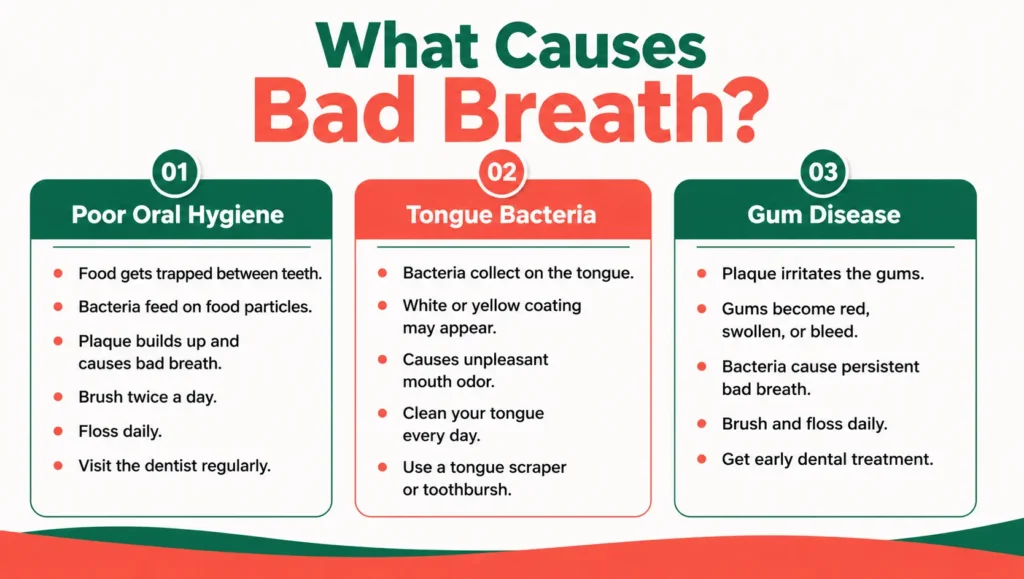
Bad breath, also called halitosis, usually starts when bacteria break down food particles and proteins inside your mouth. These bacteria release foul-smelling sulfur compounds that create unpleasant odors. Research suggests that around 80–90% of persistent bad breath cases originate in the mouth, making oral health the biggest factor. Poor brushing habits, tongue coating, gum disease, tooth decay, dry mouth, smoking, and certain foods can all contribute to the problem. In some cases, medical conditions like acid reflux or sinus infections also play a role. Understanding the root cause is the first step in learning how to get rid of bad breath permanently instead of simply masking the odor with mints or mouthwash.
Poor Oral Hygiene
Poor oral hygiene remains one of the leading causes of chronic bad breath. When you skip brushing and flossing, food particles stay trapped between your teeth and along the gumline. Oral bacteria feed on these particles and produce sulfur compounds that create an unpleasant odor. Over time, plaque builds up and increases the risk of cavities and gum disease, both of which can worsen bad breath. The American Dental Association recommends brushing twice a day with fluoride toothpaste and flossing daily to remove plaque effectively. Regular dental cleanings also help eliminate hardened tartar that brushing cannot remove. Maintaining a consistent oral care routine is one of the most effective how to get rid of bad breath permanently
and keep your mouth healthy.
Tongue Bacteria
Your tongue provides the perfect environment for odor-causing bacteria, especially on its rough surface. Tiny grooves on the tongue trap food debris, dead cells, and bacteria, allowing them to multiply quickly. Studies show that the tongue contributes to a large percentage of bad breath cases, how to get rid of bad breath permanently particularly when a visible white or yellow coating develops. Cleaning your tongue every day helps reduce bacterial growth and improves breath freshness.
Common signs of tongue bacteria include:
- White or yellow coating on the tongue
- Persistent bad breath even after brushing
- Unpleasant taste in the mouth
- Dry mouth combined with tongue buildup
Using a tongue scraper or gently brushing your tongue every day supports better oral hygiene and can help how to get rid of bad breath permanently when combined with professional dental care. At Peach Dental Clinic, our experienced dentists are committed to providing personalized treatments that help patients achieve healthier smiles and lasting oral health.
Gum Disease
Gum disease develops when plaque and bacteria collect around the gums, causing inflammation and infection. In its early stage, known as gingivitis, you may notice red, swollen, or bleeding gums. If left untreated, it can progress to periodontitis, how to get rid of bad breath permanently where bacteria damage the tissues and bone supporting your teeth. These bacteria produce strong-smelling compounds that often lead to persistent bad breath. For example, someone who brushes regularly but never flosses may still develop plaque beneath the gumline, resulting in gum disease and chronic halitosis. Another example is a smoker who experiences advanced gum disease due to tobacco use, making bad breath more difficult to control. If you’re wondering how to get rid of bad breath permanently, treating gum disease early through professional dental care and good oral hygiene is one of the most effective solutions. Understanding how to get rid of bad breath permanently starts with addressing the underlying cause rather than simply masking the odor.
How to Get Rid of Bad Breath Permanently
Many people try chewing gum or using mouthwash to hide bad breath, but these solutions only provide temporary relief. To How to get rid of bad breath permanently, you need to identify and treat the underlying cause. Since 80–90% of persistent bad breath cases begin in the mouth, improving your oral hygiene can make a significant difference. Brushing your teeth, cleaning your tongue, flossing daily, staying hydrated, and visiting your dentist regularly all work together to reduce odor-causing bacteria. If bad breath continues despite good oral care, consult a healthcare professional to rule out medical conditions. A consistent daily routine offers the best long-term results for fresher breath and better oral health.H3: Step 1: Brush Your Teeth Properly Twice a Day
Step 1: Brush Your Teeth Properly Twice a Day
Brushing your teeth twice a day helps remove plaque, food particles, and bacteria that cause bad breath. Dentists recommend brushing for at least two minutes using a soft-bristled toothbrush and fluoride toothpaste. Clean every tooth surface, including the back teeth, and replace your toothbrush every three to four months. According to the American Dental Association, regular brushing reduces plaque buildup and lowers the risk of cavities and gum disease. If you’re wondering how to get rid of bad breath permanently, brushing twice daily is one of the most effective habits. Learning how to get rid of bad breath permanently starts with consistent oral hygiene.
Step 2: Clean Your Tongue Every Day
Your tongue can hold millions of bacteria that produce unpleasant odors. A tongue scraper or soft toothbrush helps remove bacteria and debris, improving breath freshness and oral hygiene. If you want to know how to get rid of bad breath permanently, clean your tongue every morning and night. Healthy habits such as brushing, flossing, eating a balanced diet, and regular dental checkups also support long-term oral health. The National Institute of Dental and Craniofacial Research (NIDCR) provides additional oral health information to help people maintain healthy teeth and gums.
Tongue Cleaning Method
| Method | Benefit |
| Tongue scraper | Removes bacteria and debris effectively |
| Soft toothbrush | Cleans the tongue when a scraper isn’t available |
| Morning cleaning | Reduces overnight bacterial buildup |
| Night cleaning | Removes food particles before sleep |
Adding tongue cleaning to your oral care routine is a simple habit that helps how to get rid of bad breath permanently and keeps your mouth feeling fresh throughout the day.
Step 3: Floss Daily
Brushing alone cannot reach the tight spaces between your teeth where food particles and plaque often collect. Flossing removes this hidden debris before bacteria can break it down and create unpleasant odors. Dentists recommend flossing once a day to reduce plaque buildup and lower the risk of gum disease. For example, someone who brushes twice daily but skips flossing may still experience bad breath because trapped food remains between the teeth. Another example is a person with crowded teeth, where flossing removes debris that a toothbrush cannot reach. Consistent flossing improves gum health, reduces bacterial growth, and supports fresh breath. When combined with brushing and tongue cleaning, flossing becomes an essential step how to get rid of bad breath permanently.
Foods That Help Reduce Bad Breath Naturally
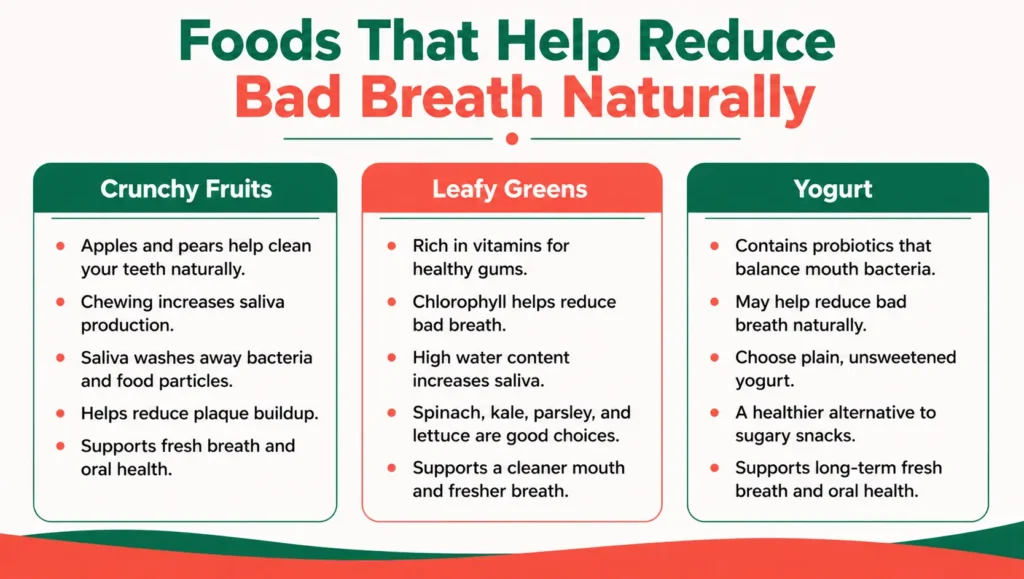
Your diet plays an important role in maintaining fresh breath. While no single food can eliminate bad breath overnight, certain foods help reduce odor-causing bacteria, increase saliva production, and improve overall oral health. Saliva naturally washes away food particles and bacteria, lowering the risk of unpleasant odors. Research suggests that eating fiber-rich fruits and vegetables supports saliva flow, while probiotic-rich foods may help balance bacteria in the mouth. Including these foods in your daily meals complements good oral hygiene and professional dental care. A healthy diet, combined with brushing, flossing, and tongue cleaning, can help how to get rid of bad breath permanently and keep your breath fresher throughout the day.
Crunchy Fruits
Crunchy fruits like apples and pears help remove food particles and plaque from your teeth while stimulating saliva production. Saliva naturally washes away bacteria and neutralizes acids that contribute to bad breath. Apples also contain polyphenols that may help reduce odor-causing compounds. how to get rid of bad breath permanently Adding crunchy fruits to your daily diet supports better oral hygiene and fresher breath. While they cannot replace brushing or flossing, they are a healthy addition to your routine for managing bad breath.
Leafy Greens
Leafy greens provide essential vitamins and minerals that support healthy gums and a cleaner mouth. Vegetables such as spinach, kale, lettuce, and parsley contain chlorophyll, a natural compound that may help reduce unpleasant mouth odors. Their high water and fiber content also encourage saliva production, which helps wash away bacteria and food debris. Including leafy greens in your meals benefits both your oral and overall health.
Some of the best leafy greens for fresher breath include:
- Spinach for vitamin C and healthy gums
- Kale for antioxidants and fiber
- Parsley for its natural deodorizing properties
- Lettuce for hydration and saliva stimulation
- Mint leaves for a refreshing taste and aroma
Eating leafy greens regularly, along with practicing good oral hygiene, can help How to get rid of bad breath permanently and promote a healthier smile.
Yogurt
Yogurt contains beneficial probiotics that help maintain a healthy balance of bacteria in the mouth and digestive system. Some studies suggest that regular consumption of probiotic yogurt may reduce levels of hydrogen sulfide, one of the main compounds responsible for bad breath. Choose plain, unsweetened yogurt instead of flavored varieties with added sugar, as excess sugar can encourage bacterial growth. For example, eating a bowl of plain yogurt with breakfast provides probiotics that support oral health throughout the day. Another example is replacing sugary desserts with yogurt and fresh fruit to reduce the risk of plaque buildup. Including yogurt as part of a balanced diet, alongside daily oral hygiene, can help how to get rid of bad breath permanently and support long-term fresh breath.
Home Remedies for Bad Breath
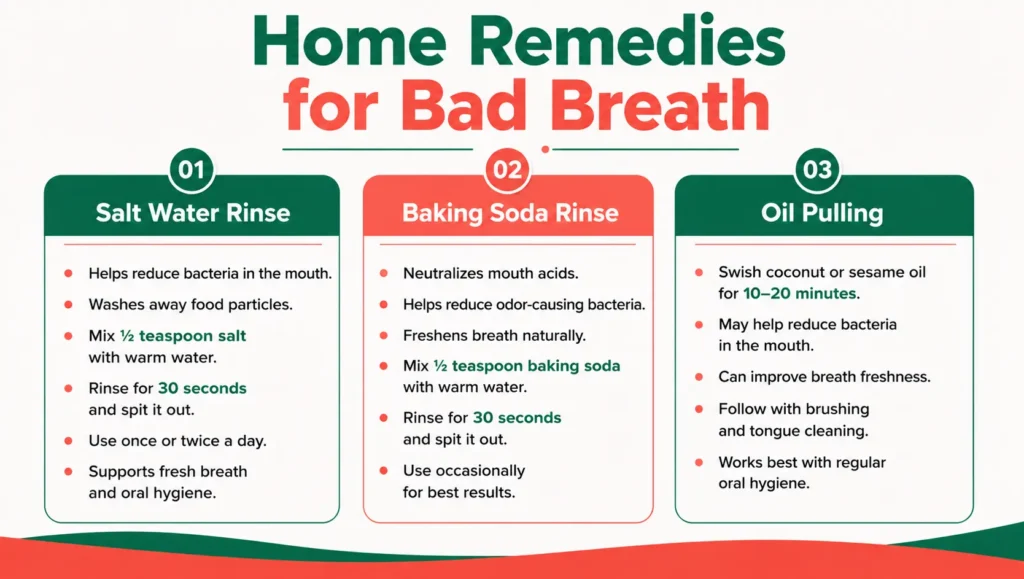
Home remedies can help reduce bad breath by lowering bacteria and improving oral hygiene. They should support—not replace—brushing, flossing, tongue cleaning, and regular dental checkups. Salt water rinses, baking soda rinses, and oil pulling may provide temporary relief and support a healthier mouth. If bad breath lasts longer than two weeks, consult a dentist to identify the underlying cause. Combining these remedies with professional dental care is one of the best how to get rid of bad breath permanently.
Medical Disclaimer: Home remedies may help manage mild bad breath but cannot treat underlying conditions such as gum disease, tooth decay, or other medical problems. Seek professional dental advice if symptoms persist.
Salt Water Rinse
A salt water rinse is a simple way to improve oral hygiene by helping wash away food particles and reducing bacteria in the mouth. Mix half a teaspoon of salt in warm water and rinse for 30 seconds before spitting it out. Use once or twice a day, but avoid swallowing the solution or using highly concentrated salt water. Combined with brushing, flossing, and tongue cleaning, it can support your efforts to how to get rid of bad breath permanently.
Baking Soda Rinse
Baking soda helps neutralize mouth acids and may reduce odor-causing bacteria, leaving your breath feeling fresher. Mix half a teaspoon of baking soda with warm water, rinse for 30 seconds, and spit it out. Use this remedy occasionally or as recommended by your dentist. When combined with good oral hygiene, it can support your efforts on how to get rid of bad breath permanently.
| Baking Soda Rinse | Benefit |
| Neutralizes mouth acids | Reduces conditions that support bacterial growth |
| Freshens breath | Helps decrease unpleasant odors |
| Removes loose debris | Supports a cleaner mouth after meals |
| Easy to prepare | Requires only baking soda and warm water |
A baking soda rinse supports your oral care routine, but consistent brushing, flossing, and dental visits remain essential to how to get rid of bad breath permanently.
Oil Pulling
Oil pulling is a traditional oral hygiene practice that involves swishing oil, such as coconut or sesame oil, around the mouth for 10–20 minutes before spitting it out. Some people use this method to reduce bacteria and improve breath freshness. While research on its effectiveness remains limited, a few studies suggest that oil pulling may lower bacterial levels when combined with regular oral care. For example, someone who practices oil pulling in the morning and follows it with brushing and tongue cleaning may notice fresher breath throughout the day. Another example is using coconut oil after breakfast as part of a complete oral hygiene routine. Oil pulling should complement, not replace, brushing and flossing if your goal is to how to get rid of bad breath permanently.
Conclusion
Learning how to get rid of bad breath permanently starts with addressing the root cause instead of masking the odor with temporary solutions. Consistent brushing, daily flossing, tongue cleaning, proper hydration, and a balanced diet can significantly improve your oral health and keep your breath fresh. If bad breath persists despite following a good oral hygiene routine, it may indicate an underlying dental or medical condition that requires professional evaluation. Taking early action not only improves your breath but also protects your teeth, gums, and overall well-being. Ready to enjoy lasting fresh breath? Schedule a comprehensive dental checkup with our experienced dentists today. We can identify the cause of your bad breath, recommend the right treatment, and help you achieve a healthier, more confident smile. how to get rid of bad breath permanently Contact us today to take the first step toward fresher breath and better oral health. Ready to enjoy fresher breath and better oral health? Contact Peach Dental Clinic today to schedule your dental consultation. Our experienced team will identify the root cause of your bad breath and recommend the most effective treatment for a healthy, confident smile.
Frequently Asked Questions
1. Can bad breath be cured permanently?
Yes. Most cases can be treated permanently by addressing the underlying cause, maintaining good oral hygiene, and visiting your dentist regularly.
2. What is the main cause of bad breath?
Poor oral hygiene is the leading cause. Plaque, tongue bacteria, gum disease, tooth decay, and dry mouth commonly contribute to persistent bad breath.
3. How can I get rid of bad breath permanently?
Brush twice a day, floss daily, clean your tongue, stay hydrated, eat a balanced diet, and schedule regular dental checkups to treat the root cause.
4. Does cleaning the tongue help reduce bad breath?
Yes. Cleaning your tongue removes bacteria, food debris, and dead cells that often cause unpleasant mouth odor and improves overall oral hygiene.
5. Can gum disease cause persistent bad breath?
Yes. Bacteria trapped around infected gums produce foul-smelling compounds. Early treatment and proper oral care can help eliminate the problem.
6. Which foods help reduce bad breath naturally?
Crunchy fruits, leafy greens, plain yogurt, green tea, and water-rich vegetables help increase saliva production and reduce odor-causing bacteria.
7. Is mouthwash enough how to get rid of bad breath permanently?
No. Mouthwash temporarily freshens your breath, but it cannot replace brushing, flossing, tongue cleaning, and professional dental care.
8. Can stomach problems cause bad breath?
Yes, although they are less common. Conditions like acid reflux (GERD) can contribute to bad breath after oral causes have been ruled out.
9. When should I visit a dentist for bad breath?
See your dentist if bad breath lasts longer than two weeks or is accompanied by bleeding gums, tooth pain, loose teeth, or mouth sores.
10. How often should I have a dental checkup to prevent bad breath?
Most dentists recommend a professional dental checkup and cleaning every six months to remove plaque, detect oral problems early, and maintain fresh breath.