Introduction
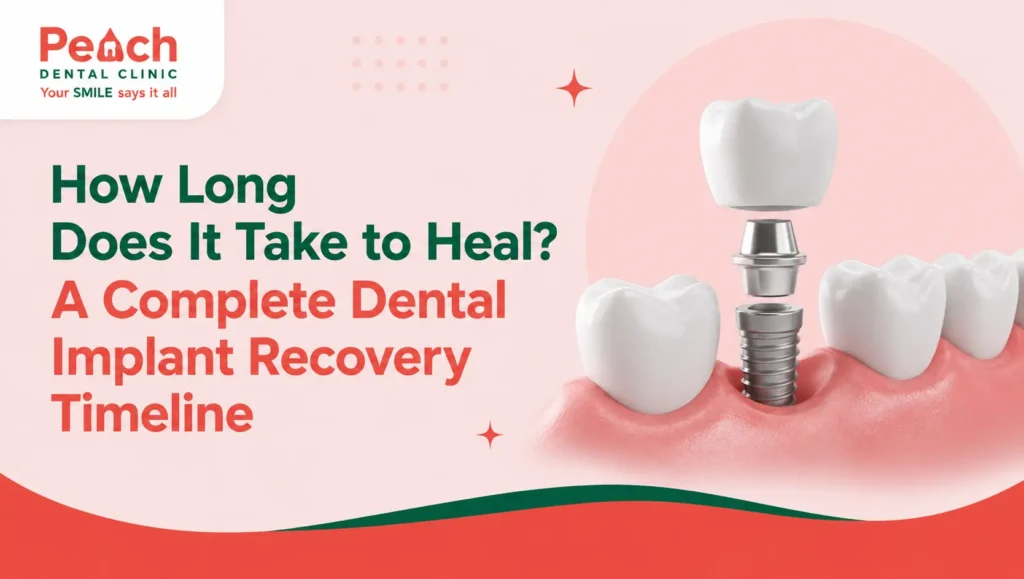
Recovering from dental implant surgery is one of the biggest concerns for patients considering treatment. Questions like “How long will it take to heal?” and “Is my recovery progressing normally?” are common because healing occurs in stages and varies from person to person. Understanding the dental implant recovery timeline can help you set realistic expectations and avoid complications. The good news is that dental implants are highly predictable, with an overall success rate of about 95% when placed and maintained correctly. AAOMS Oral and Maxillofacial Surgeons While most patients return to normal daily activities within a few days, complete healing and bone fusion (osseointegration) typically take 3–6 months. In this guide, we’ll walk you through every stage of the dental implant recovery timeline, explain what to expect, and share practical tips for a smoother, faster recovery.
Dental Implant Recovery Timeline: Week-by-Week Healing Process
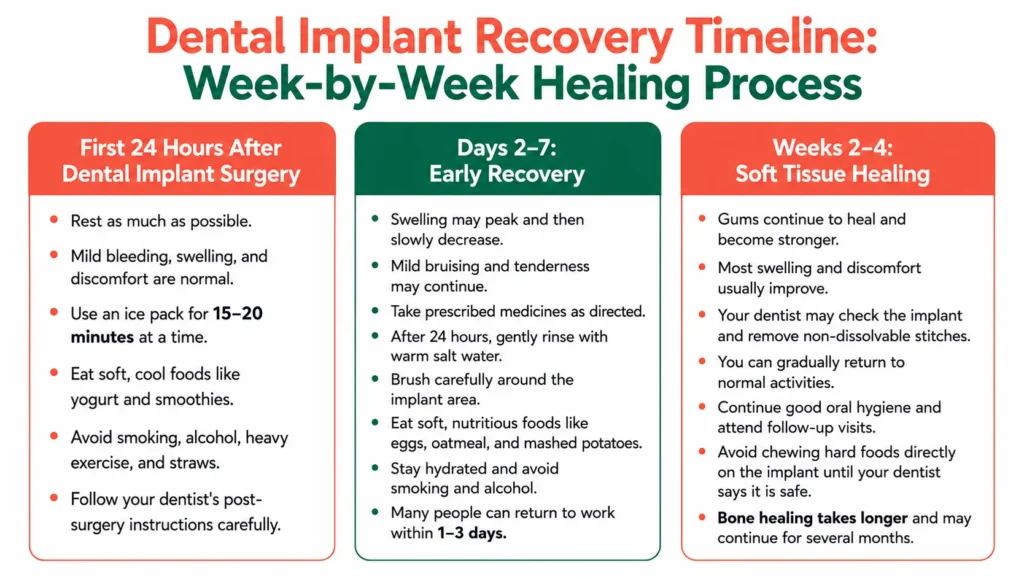
The dental implant recovery timeline follows a predictable pattern, although healing speed varies based on your overall health, bone quality, and how well you follow post-operative instructions. Most patients experience the most noticeable symptoms during the first few days, while the jawbone continues healing beneath the surface for several months. According to the American Academy of Implant Dentistry (AAID) .Dental implants have a long-term success rate of over 95% when placed correctly and supported with proper aftercare. Understanding each stage of the dental implant recovery timeline helps you know what is normal, reduces anxiety, and allows you to recognize when you should contact your dentist.
First 24 Hours After Dental Implant Surgery
The first 24 hours play a vital role in your dental implant recovery timeline. During this period, your body forms a protective blood clot around the implant site, which supports healing and reduces the risk of infection. You may notice mild bleeding, swelling, and discomfort, but these symptoms are completely normal. Research published by the National Institute of Dental and Craniofacial Research shows that following your Peach Dental Clinic dentist’s post-surgical instructions significantly lowers the risk of complications. During the dental implant recovery timeline, rest as much as possible, apply an ice pack for 15–20 minutes at a time, and eat soft, cool foods such as yogurt or smoothies. Avoid smoking, alcohol, vigorous exercise, and drinking through a straw, as these habits can disturb the healing process.
Days 2–7: Early Recovery
During days 2–7, swelling usually reaches its peak before gradually improving. Mild bruising and tenderness may continue, but most patients notice steady progress throughout the week. Many people return to work within 1–3 days, depending on the complexity of the procedure and their comfort level.
Focus on these healthy habits during early recovery:
- Take prescribed medications exactly as directed.
- Rinse gently with warm salt water after the first 24 hours.
- Brush carefully around the implant without disturbing the surgical site.
- Continue eating soft, nutritious foods like scrambled eggs, mashed potatoes, and oatmeal.
- Stay hydrated and avoid smoking or alcohol.
Following these simple steps helps reduce inflammation, protects the implant, and supports healthy tissue healing.
Weeks 2–4: Soft Tissue Healing
Between weeks 2 and 4 of the dental implant recovery timeline, your gums continue healing and become stronger around the implant. Most swelling and discomfort disappear during this stage, allowing you to return to your regular routine with greater confidence. Your dentist may remove non-dissolvable stitches and check that the implant site is healing as expected. Although the gums look healthier, the jawbone still needs several more months to complete osseointegration.
For example, a patient who received a single dental implant often resumes normal work, light exercise, and everyday activities within two weeks. Someone who underwent multiple implants or bone grafting may require additional healing time. Understanding the dental implant recovery timeline can help patients know what to expect during the healing process. Continue maintaining excellent oral hygiene, attend follow-up appointments, and avoid chewing hard foods directly over the implant until your dentist confirms that healing is progressing well.
Tips to Speed Up Your Dental Implant Recovery Timeline
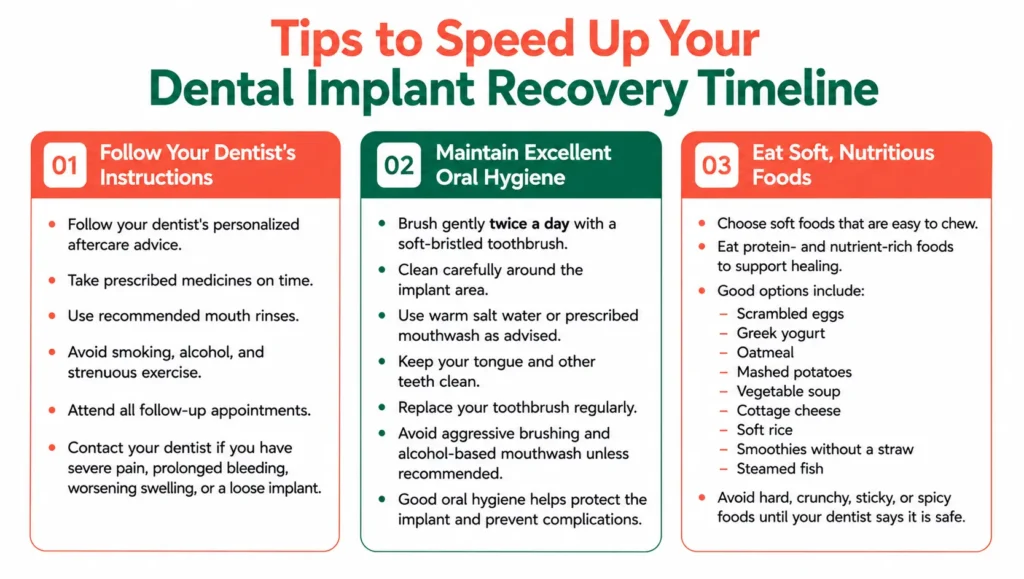
A smooth dental implant recovery timeline depends on the choices you make after surgery. While your body heals naturally, healthy habits can support faster recovery and reduce the risk of complications. Studies show that dental implants achieve success rates of over 95% when patients follow proper aftercare and maintain good oral hygiene. Focus on getting enough rest, eating nutrient-rich soft foods, staying hydrated, avoiding tobacco products, and attending every follow-up appointment. Clean your mouth gently as instructed and avoid chewing on the implant site until your dentist approves. Following these simple steps consistently is an important part of the dental implant recovery timeline, helping support proper healing and strong bone integration.
Start Your Smile Journey Today
Book a consultation at Peach Dental Clinic and receive expert guidance for a smooth dental implant recovery.
Follow Your Dentist’s Instructions
Your dentist provides personalized aftercare instructions because every implant procedure differs. Following these guidelines is an important part of the dental implant recovery timeline and helps protect the surgical site while supporting proper healing. According to the American Dental Association (ADA), good post-operative care reduces the risk of infection and promotes healthy tissue recovery.
Take prescribed medications on time, use recommended mouth rinses, and avoid smoking, alcohol, and strenuous exercise during the early healing phase. Following these steps is an important part of the dental implant recovery timeline. Keep all follow-up appointments so your dentist can monitor your progress and address any concerns before they become serious.
If you notice severe pain, prolonged bleeding, swelling that worsens after several days, or a loose implant, contact your dentist immediately instead of waiting for your next visit.
Maintain Excellent Oral Hygiene
Keeping your mouth clean protects the implant from harmful bacteria and supports healthy gum healing. Maintaining excellent oral hygiene every day is an important part of the dental implant recovery timeline. Although you should avoid disturbing the surgical area, you still need to maintain excellent oral hygiene every day. Research shows that poor oral hygiene increases the risk of peri-implant diseases, one of the leading causes of implant complications. Maintaining good oral hygiene is an important part of the dental implant recovery timeline. Use a soft-bristled toothbrush, clean gently around the implant, and follow your dentist’s recommendations for rinsing.
| Do | Avoid |
| Brush gently twice a day | Scrubbing the implant site aggressively |
| Use a soft-bristled toothbrush | Using hard-bristled brushes |
| Rinse with warm salt water or prescribed mouthwash | Using alcohol-based mouthwash unless advised |
| Keep your tongue and remaining teeth clean | Ignoring plaque buildup |
| Replace your toothbrush regularly | Sharing toothbrushes |
Good oral hygiene protects both your implant and your long-term oral health.
Eat Soft Nutritious Foods
Your diet plays an important role in the dental implant recovery timeline after implant surgery. Soft, nutrient-rich foods provide the vitamins and protein your body needs to repair tissues while preventing unnecessary pressure on the implant. Foods rich in protein, vitamin C, calcium, and zinc support wound healing and bone health. Choose meals that are easy to chew and swallow during the first few weeks.
For example, you can eat:
- Scrambled eggs
- Greek yogurt
- Oatmeal
- Mashed potatoes
- Vegetable soup
- Cottage cheese
- Soft rice
- Smoothies (without using a straw)
- Steamed fish
Avoid hard, crunchy, sticky, or spicy foods until your dentist confirms that your implant has healed properly. Choosing the right foods is an important part of the implant recovery timeline, helping you recover comfortably and protect the implant during the early healing stages.
What Can Delay Your Dental Implant Recovery Timeline
Several factors can slow your dental implant recovery timeline, even when the surgery goes well. Poor oral hygiene, smoking, uncontrolled diabetes, infections, and skipping follow-up visits can interfere with healing and reduce implant success. According to the American Academy of Implant Dentistry (AAID), dental implants have a success rate of over 95%, but patients who ignore aftercare instructions face a higher risk of complications. Healing depends on healthy gums and successful bone integration,So, every step you take after surgery matters. Following your dentist’s advice, maintaining good oral hygiene, and addressing concerns early are all important parts of the dental implant recovery timeline. These steps can support proper healing and improve the long-term success of your dental implant.
Poor Oral Hygiene
Poor oral hygiene allows plaque and harmful bacteria to accumulate around the implant, increasing the risk of inflammation and infection. Maintaining proper oral hygiene is an important part of the dental implant recovery timeline. If you neglect daily brushing and cleaning, bacteria can irritate the surrounding gums and lead to peri-implant mucositis, an early stage of gum inflammation. Without timely treatment, this condition may progress to peri-implantitis, which can damage the supporting bone and threaten the implant. Research shows that plaque control plays a key role in maintaining healthy dental implants over the long term. Brush twice a day with a soft-bristled toothbrush, clean between your teeth using floss or interdental brushes, and attend regular professional cleanings. Consistent oral hygiene protects your implant and supports a smoother recovery.
Skipping Follow-Up Appointments
Follow-up appointments help your dentist monitor healing and identify small problems before they become serious. Even if you feel comfortable, you should never skip scheduled reviews because bone healing continues for several months after implant placement.
During follow-up visits, your dentist will:
- Check that the implant remains stable.
- Examine your gums for signs of infection or inflammation.
- Monitor bone healing through clinical evaluation or X-rays when needed.
- Remove stitches if required.
- Adjust your aftercare instructions based on your healing progress.
- Confirm when your implant is ready for the final crown.
Regular follow-up care helps ensure that your dental implant recovery timeline stays on track and reduces the risk of long-term complications.
Infection Around the Implant
An infection around the implant can delay healing and affect the implant’s stability if left untreated. Bacteria may enter the surgical site because of poor oral hygiene, smoking, or ignoring post-operative instructions. Early signs often include persistent swelling, redness, pain, bad breath, or pus around the implant. Prompt treatment can usually control the infection and protect the implant.
For example, a patient who skips brushing around the implant may develop gum inflammation within a few weeks. Another patient with uncontrolled diabetes may experience slower healing, making infection more likely. Contact your dentist immediately if symptoms worsen instead of improving. Early diagnosis and treatment help prevent bone loss and keep your dental implant recovery on schedule.
Long-Term Care After Dental Implant Recovery
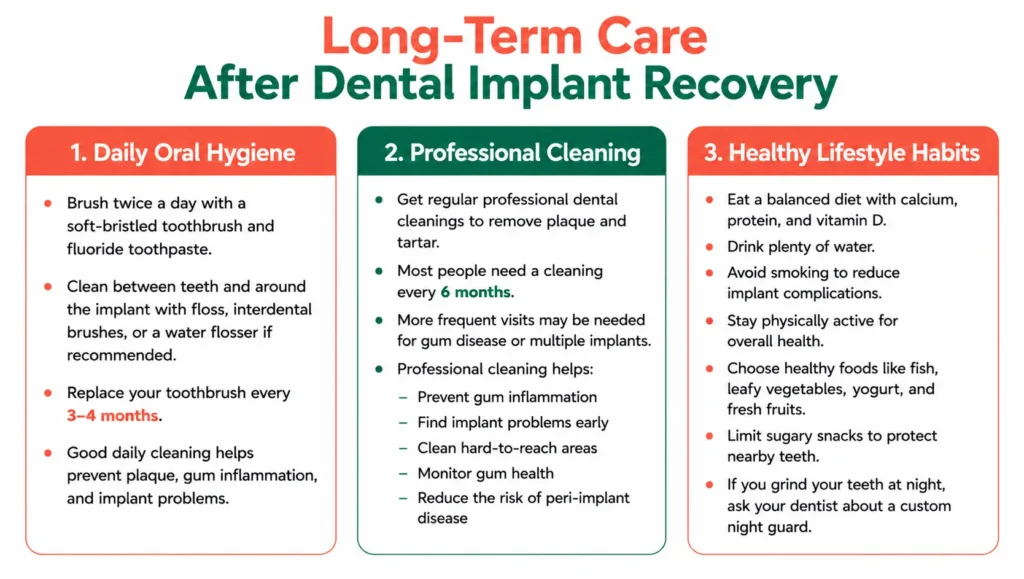
Completing your dental implant recovery timeline marks the beginning of long-term implant care. Dental implants can last for decades when you maintain healthy habits and attend regular dental checkups. According to the American Academy of Implant Dentistry (AAID), dental implants have a long-term success rate of over 95% with proper maintenance. Brush and floss daily, schedule professional cleanings, and avoid habits that place excessive pressure on your implant, such as chewing ice or using your teeth to open packages. A balanced diet, good oral hygiene, and routine dental visits help protect your gums and jawbone, ensuring your implant remains strong, functional, and healthy for many years.
Daily Oral Hygiene
Daily oral hygiene is the foundation of long-lasting dental implants. Plaque can build up around implants just as it does around natural teeth, increasing the risk of gum inflammation and peri-implant disease. Brush your teeth twice a day using a soft-bristled toothbrush and fluoride toothpaste. Clean between your teeth and around the implant with dental floss, interdental brushes, or a water flosser if recommended by your dentist. Replace your toothbrush every three to four months to maintain effective cleaning. Consistent oral hygiene removes harmful bacteria before they cause problems and helps keep your gums healthy. Spending just a few minutes each day caring for your implant can protect your smile for many years.
Professional Cleaning
Professional dental cleanings remove plaque and tartar that regular brushing cannot eliminate. Even with excellent home care, routine cleanings help maintain healthy gums and protect the tissues surrounding your dental implant. Most dentists recommend a professional cleaning every six months, although patients with gum disease or multiple implants may need more frequent visits.
| Benefit of Professional Cleaning | Why It Matters |
| Removes hardened tartar | Reduces the risk of gum inflammation |
| Detects early implant problems | Allows prompt treatment before complications develop |
| Cleans difficult-to-reach areas | Improves long-term implant health |
| Monitors gum condition | Helps prevent peri-implant disease |
| Reinforces oral hygiene techniques | Encourages better home care habits |
Regular professional cleanings complement your daily oral hygiene routine and support the long-term success of your dental implant.
Healthy Lifestyle Habits
Healthy lifestyle choices play a major role in protecting your dental implant and overall oral health. Eating a balanced diet rich in calcium, protein, and vitamin D supports strong bones and healthy gums. Drinking enough water helps wash away food particles and bacteria, while avoiding smoking reduces the risk of implant complications. Regular physical activity also supports overall health and promotes better healing.
For example, choosing grilled fish, leafy vegetables, yogurt, and fresh fruits provides nutrients that strengthen bone and gum tissues. Replacing sugary snacks with nuts or cheese can lower the risk of tooth decay around neighboring teeth. If you grind your teeth while sleeping, wearing a custom night guard protects both your implant and natural teeth from excessive pressure, helping preserve your smile for years to come.
Conclusion
Understanding the dental implant recovery timeline helps you prepare for every stage of healing with confidence. While mild swelling and discomfort are normal during the first few days, following your dentist’s instructions, maintaining excellent oral hygiene, eating a healthy diet, and attending regular follow-up appointments all contribute to a successful recovery. Most importantly, healing doesn’t end when the discomfort fades—proper long-term care ensures your dental implant remains strong, stable, and functional for many years.
If you’re considering dental implants or have questions about your recovery, the experienced team at Peach Dental Clinic is here to help. Schedule a consultation today to receive personalized treatment, expert guidance, and compassionate care throughout your dental implant journey toward a healthier, confident smile.
Frequently Asked Questions
1. How long does the dental implant recovery timeline usually take?
Initial recovery usually takes 1–2 weeks, while complete bone healing and osseointegration may take 3–6 months.
2. Is swelling normal after dental implant surgery?
Yes, mild swelling, bruising, and discomfort are common for the first 48–72 hours and usually improve gradually.
3. When can I eat normally after getting a dental implant?
Start with soft foods for the first few days and slowly return to your regular diet as your dentist recommends.
4. What foods help speed up dental implant recovery?
Protein-rich foods, eggs, yogurt, fish, soups, and vitamin C-rich fruits can support tissue repair and bone healing.
5. What can delay the dental implant recovery timeline?
Smoking, poor oral hygiene, infection, teeth grinding, uncontrolled diabetes, and missed follow-up appointments can delay healing.
6. How do I know if my dental implant is healing properly?
Decreasing swelling, minimal discomfort, healthy gums, and a stable implant are positive signs of normal healing.
7. When can I return to work after dental implant surgery?
Many patients can return to office work within 1–3 days, but complex procedures may require additional recovery time.
8. Can smoking affect dental implant healing?
Yes, smoking can slow bone healing and increase the risk of infection and implant failure.
9. How often should I visit the dentist after dental implant treatment?
Regular checkups and professional cleanings are often recommended every six months, depending on your oral health.
10. Where can I get expert dental implant treatment in Chennai?
Choose an experienced dental clinic offering advanced implant treatment, personalized aftercare, and regular follow-up support.